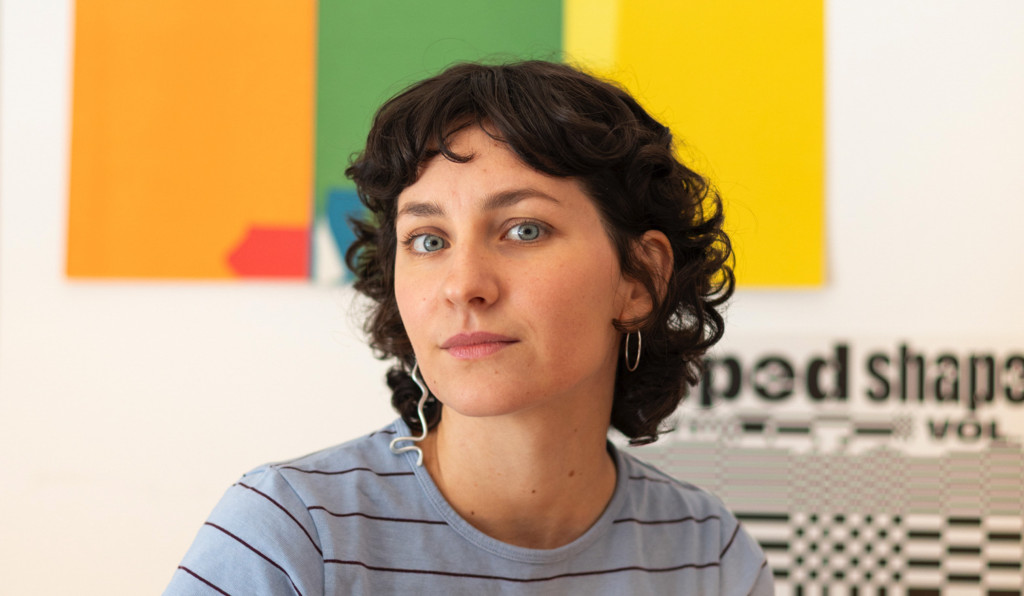
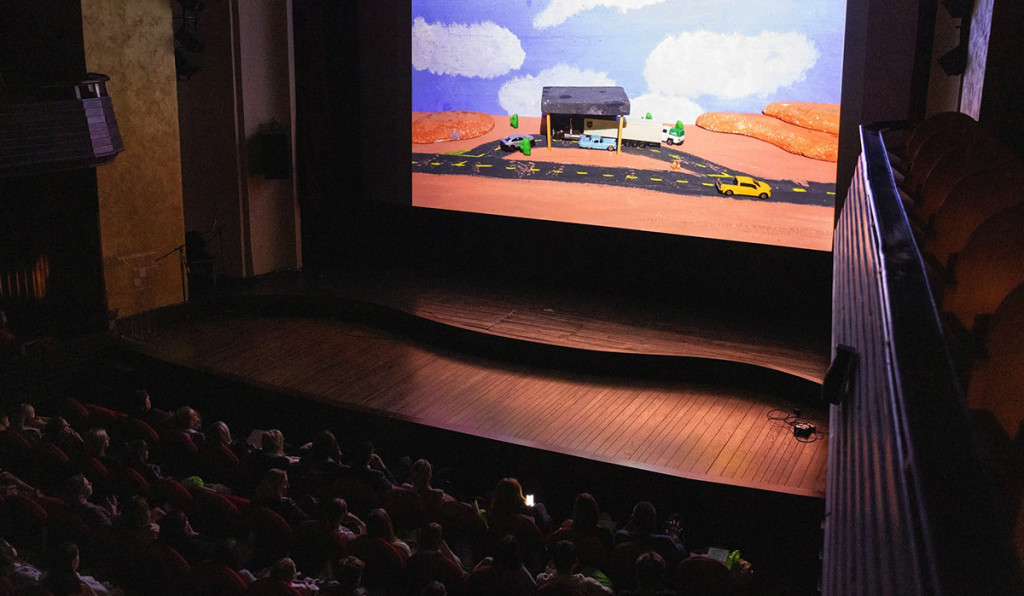
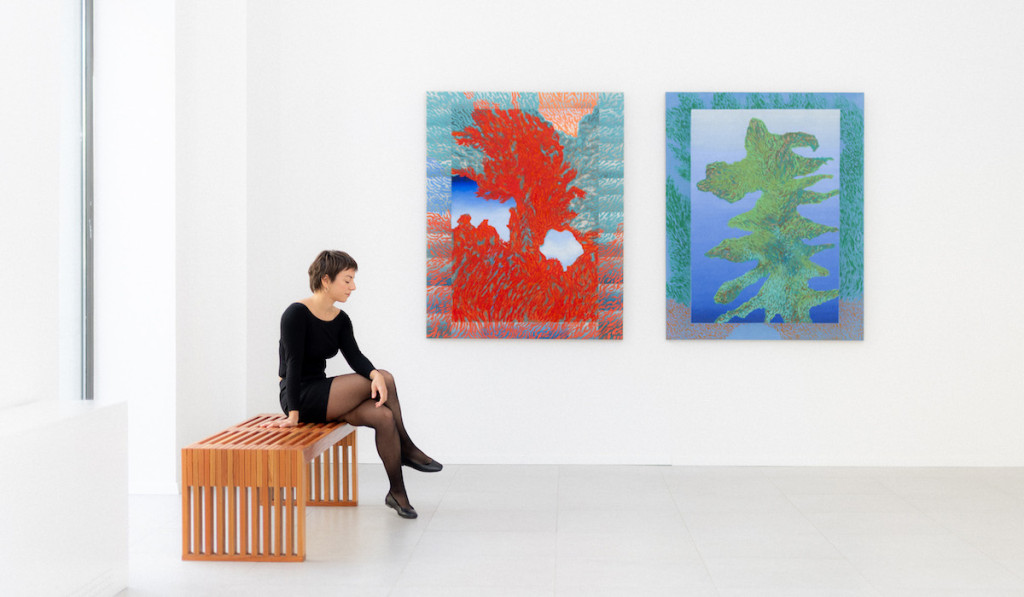
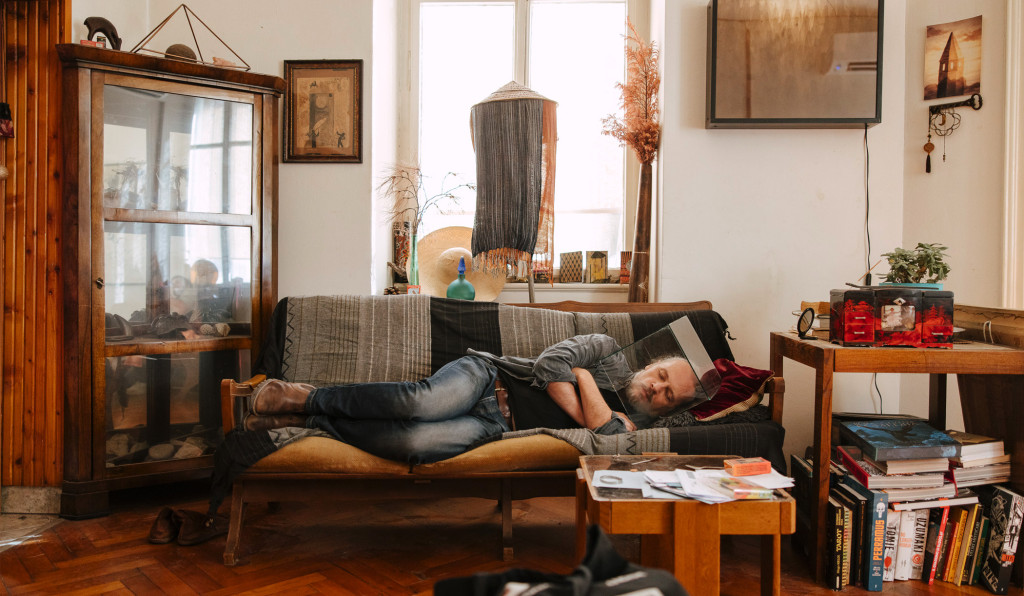
One of the guest lecturers of this year’s generation of WHW Academy is the award-winning British artist and professor at Lancaster University, Tim Etchells. Working at the intersection and overlap of performing, visual and literary arts, Tim uses word and image, voice and gesture, text and space to pose complex questions about contemporary experiences, where the search for potential (and never one-sided) possible answers rests on the shoulders of the audience. He is a member and the artistic director of the iconic experimental theatre group Forced Entertainment.
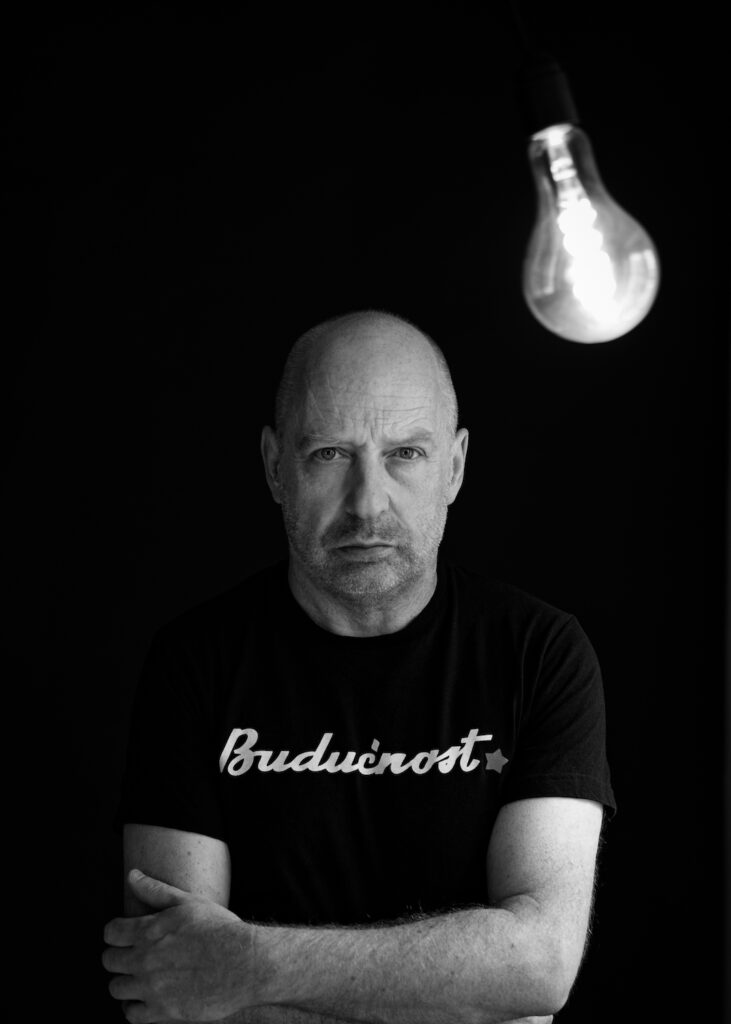
► When we talk about your work, it is impossible not to mention the experimental theatre / performance group Forced Entertainment, whose head you have been from the start. In one interview, I read that the work of the group was conceived as a reaction to the commodification of theatre and, more broadly, of art in general. What were and are the intensions behind the Forced Entertainment?
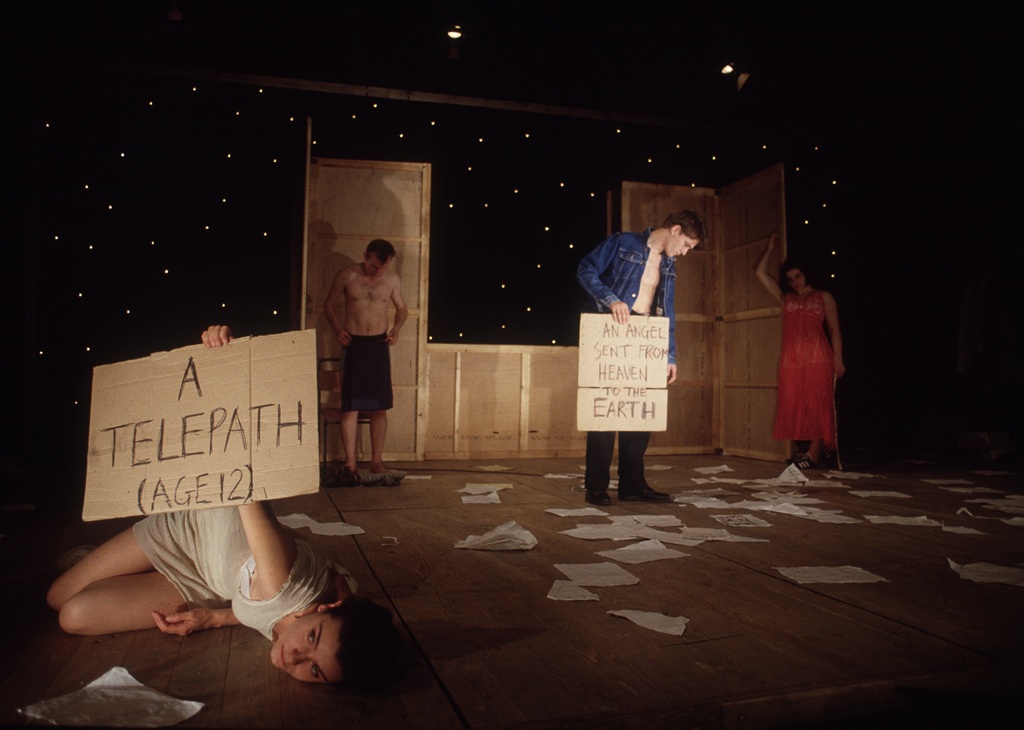
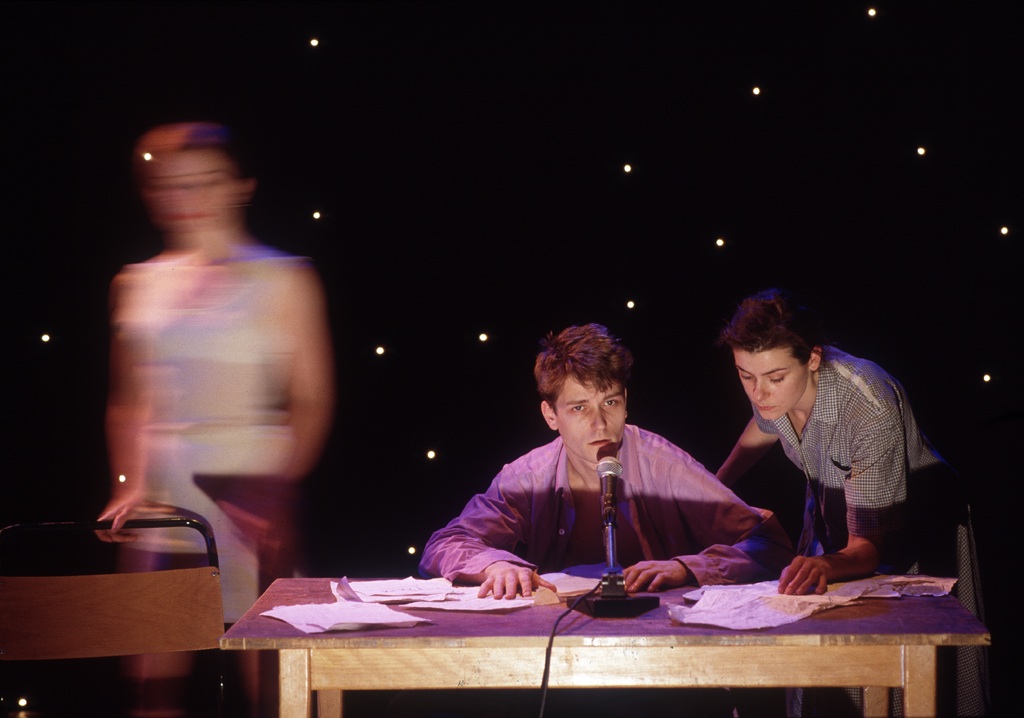
Tim Etchells: When we started in 1994, nearly forty years ago, Forced Entertainment was a reaction to a couple of things, but mostly to the theatre scene in the UK (that we were not very excited about!). We were hungry to make a different kind of theatre, something that could speak more directly to the reality we experienced, and which would allow us to bring in influences from other places, to get away from literary realism and to draw on visual art, cinema, music culture, other places. That was where we were coming from.
The other thing we shared was an interest in the ephemerality of live events and the way that performance convenes a temporary community – creating a process between people, time, and place, rather than a material object. In that sense it did and does have a kind of resistance to a certain sort of commodification, but of course in a world that’s dominated by Capitalist logics that resistance is limited. Certainly though, part of the interest was in the fact that the work and its value were intangible, and that for me remains an interest in terms of live performance: that it resists materiality and the fixedness that other forms have.
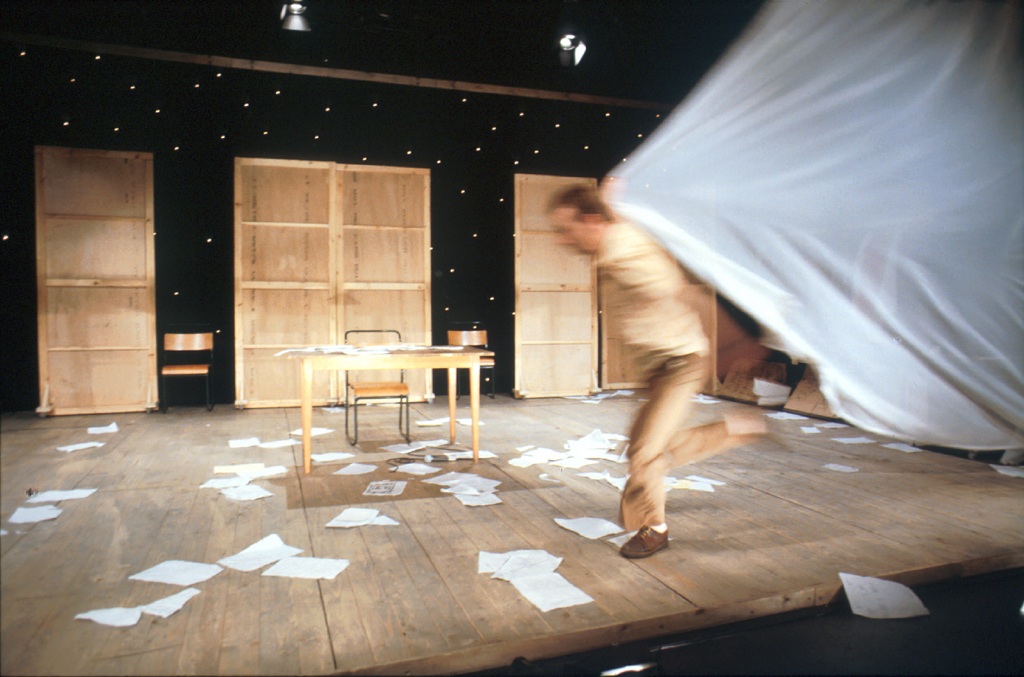
► The starting point of your practice is in the performing arts, and even in artworks realized in other media, the element of time is very important for you, I’d say. How has performativity shaped the way you think about art in general? For example, has this experience made you more aware of the very temporary nature of the relationship, of connection and communication with the audience?
Tim Etchells: Because I come from performance, where my beginnings as an artist are, I tend to understand everything as a temporal process and as a process of exchange with viewers or audiences. When I am working on neon pieces or installations, drawings, or videos, even when I am writing for publications, I think a lot about the moment ad process of exchange in which the viewer, reader or spectator will encounter the work. In that moment of encounter there is a time-based element: the person who encounters the work does so at a particular time, in a particular context and brings their own lives, expectations, thoughts. There is a dialogue, a live exchange, an activation of the artwork from that other place and something new emerges. In this sense I’ve always thought that the installations, even a short story or a novel, also perform; draw the viewer or the reader into an exchange which is always temporary, fragile, and specific to the context, circumstances, and temporality. That’s important to me and I think about it in terms of my whole work. It certainly comes from performance, but it extends to works which are much more about objects or texts.
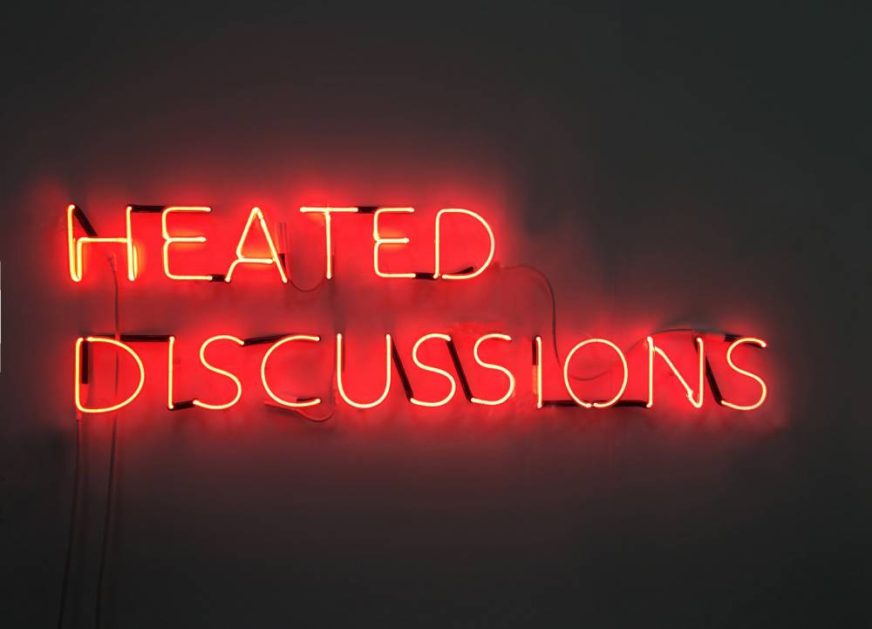
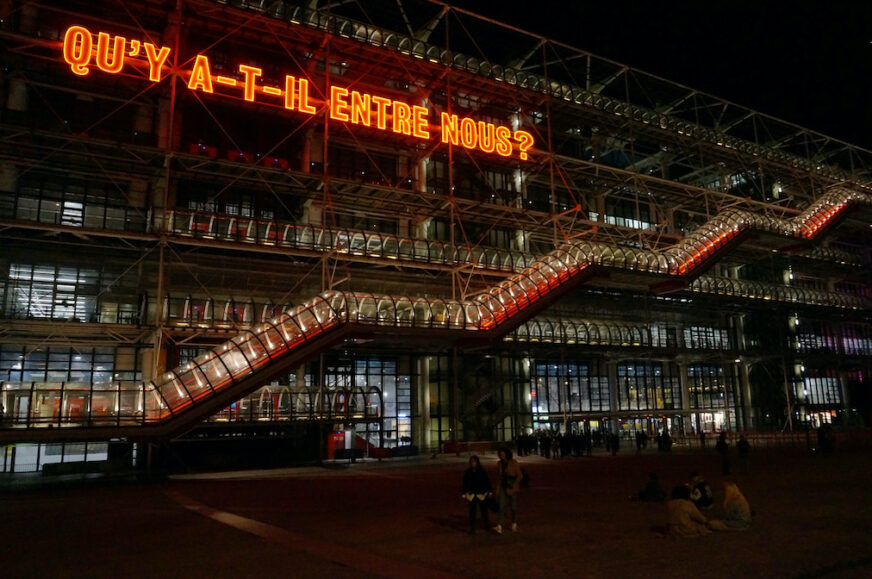
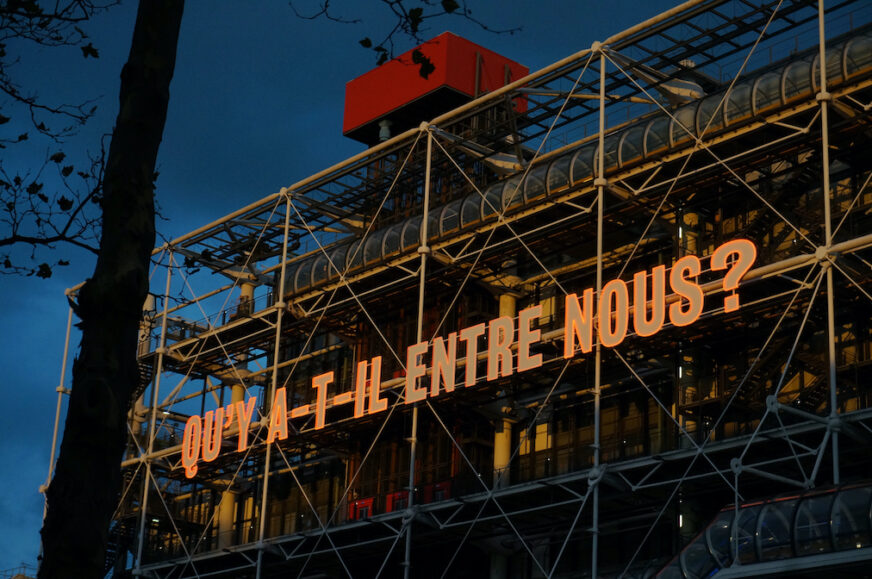
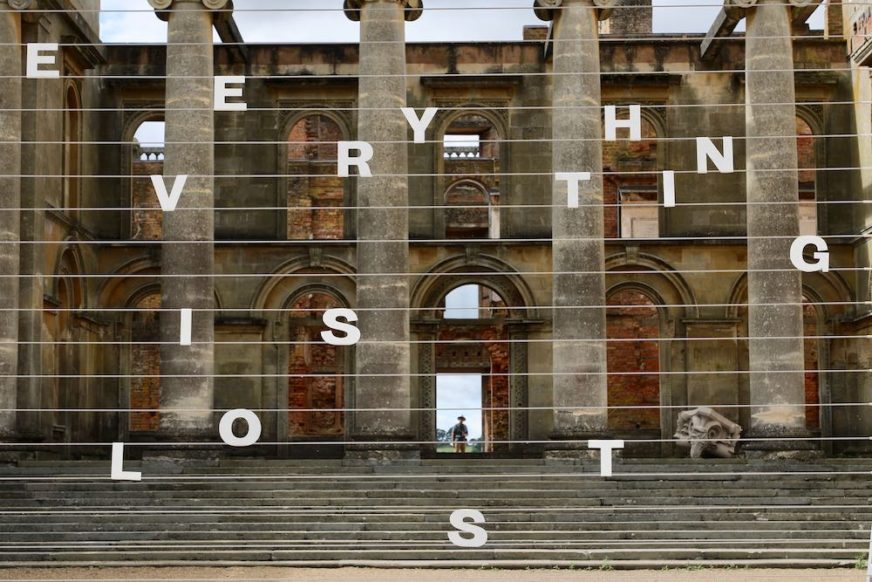
► You are writer as well, so language is naturally one of your primary media. However, what I find very interesting is that you are looking for fractures and ambiguities in language that in a certain way reflect our reality and pose challenging questions about our contemporaneity. For instance, in one of your recent works, Qu’y a-t-il entre nous?, there is a whole sort of questions implied: What is between us – a void or a space of interaction and a dialogue? What is that we share, what values? But also: what indeed is public in a public space and what kind of relationships are being made between a viewer and an artwork, between an art institution and its audience?
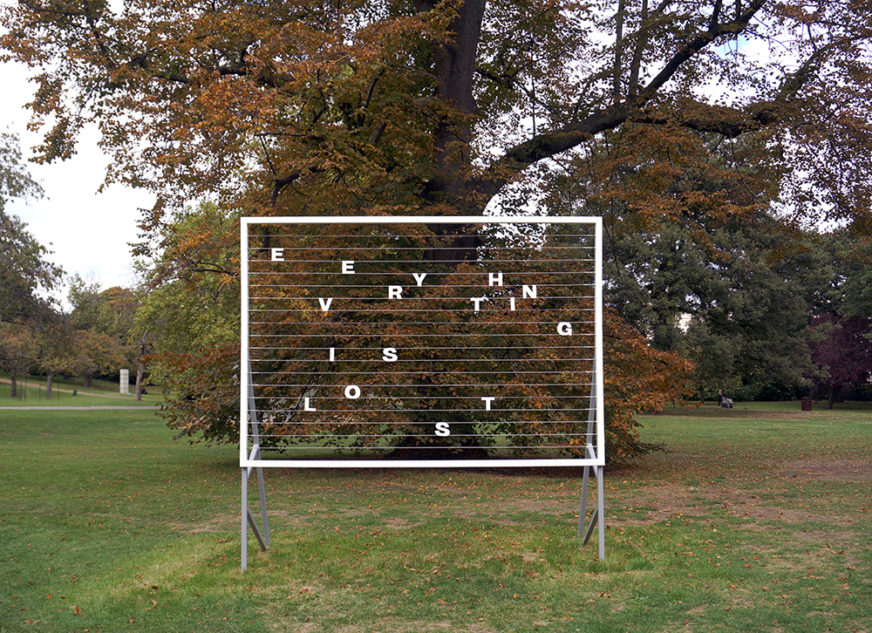
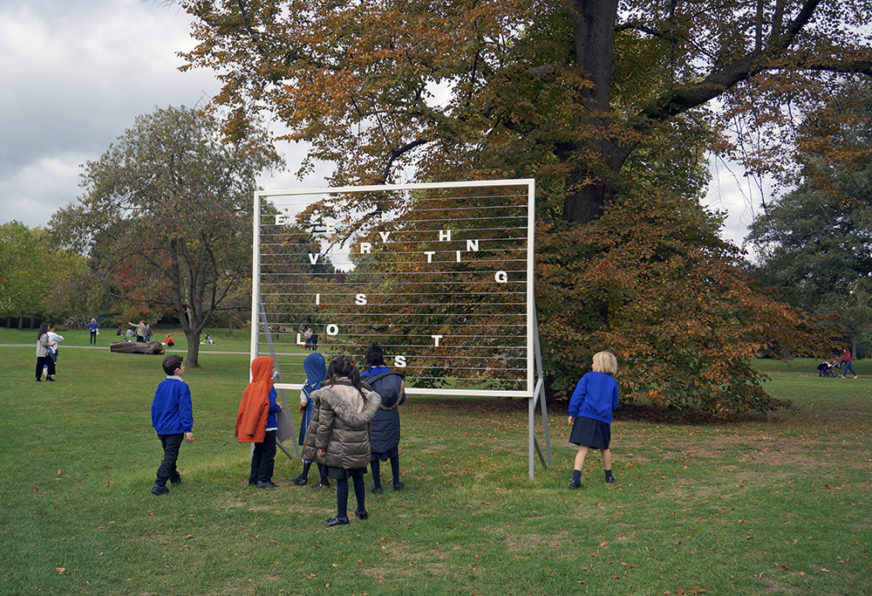
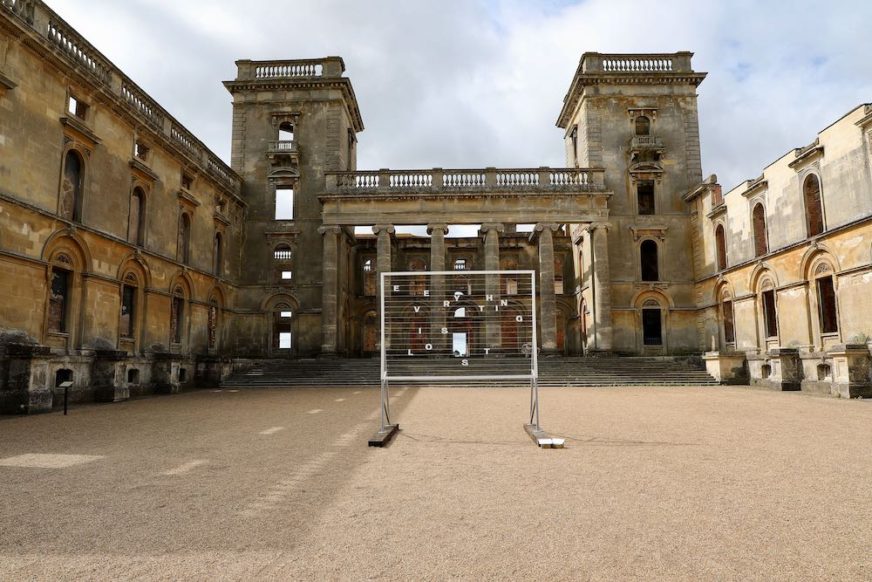
Tim Etchells: On one level, what I am interested to do with those works is to create interventions, often (but not always) in public space, where the language proposes something which is strong, has a topic, a concept, a thematic gesture, but it’s also ambiguous or unfinished or open in a certain way. So, the work is concrete and vivid, animating a very particular energy and set of concerns, but on the other hand it is open and demands that as a viewer you do the work to think it through or to fill in blank space. Indeed, this question of ‘what is between us?’ can be many things, from common values to the void, but it could also be a barrier, a wall. Meanwhile, the “us” is also a question – the “us” could be “me and you”, “everybody in the city”, “Beaubourg and Paris”, or “France and the rest of Europe”. Because things are not specified, they float; because they float, they demand that the spectator do some work.
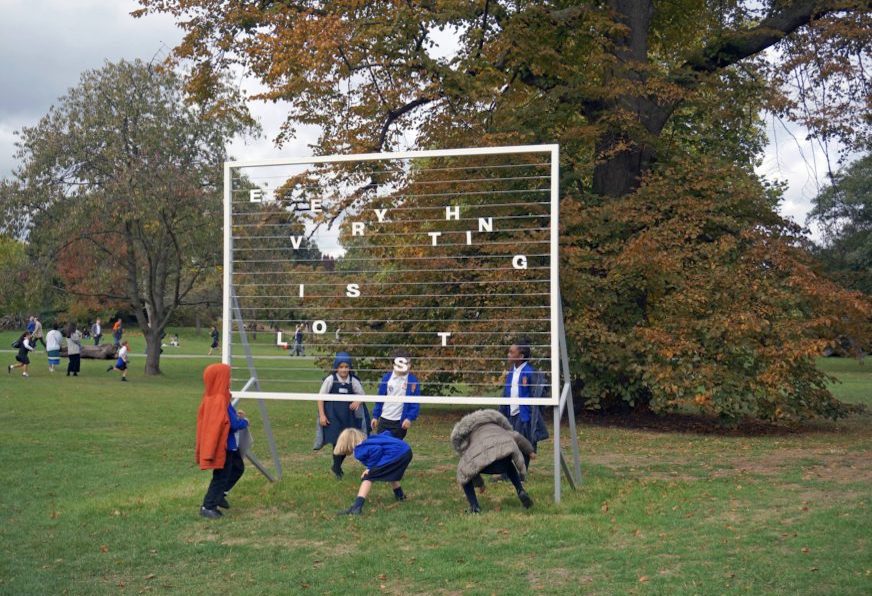
That’s what I always try to do with my works, to create spaces that suck people into questions, speculations, into thinking what might be at stake in a particular phrase or installation. Aside from the speculation that spectators are drawn into, these works also try to get people to reflect on the fact that they are agents in the process, that it is not a matter of being told something by the work, but rather a process of exchange. This is very active process for the viewer, and I am interested in stressing the fact that in any situation of communication the viewer is responsible for more than a half of what is happening. I am trying to underscore for people their own agency in making meaning.
► Your works raise delicate questions of ethical proportions – questions of communication, sharing and emotion, among others. Today, when our daily engagement is often reduced (or limited) to pressing a “like” button on social media, is (and could be) the role of art in making space for ideas that channel general values crucial?
Tim Etchells: The desire for me is always to make work that creates exchange that is complex, and not easy to solve. In these works – especially those in the public space – the phrase or text that I am using becomes a question or knot that people are left to untangle and keep coming back to.
► Collaboration is an important aspect of your practice. What does such a work process look like? What are its challenges, and what are the advantages?
Tim Etchells: A lot of my work has been collaborative. The positive thing, which is also probably a negative, is that in dialogue, in collaboration, ideas are always interrogated, questioned, criticised, taken to pieces, extended, amplified, used as material for another ideas. It can be a painful and frustrating process. In general, my feeling is that in those processes you end up with a stronger and more complex work because all the individuals in a group are pushing and pulling in different directions. From that you end up with a complex work – object, performance, whatever it is. In Forced Entertainment, a group who have been collaborating for nearly 40 years, we always say and feel that what we make together is better, more complex, and stronger that any one of us would make on our own. The work we do together comes from a constellation of impulses, energies, and understandings that we have as a group. It is bigger that any single one of us, and I think this is a tremendous advantage, especially in the performance work. For me, the strength of this work is that it comes and is energized from all these different understandings and sensibilities.
The disadvantage, as I said, is that collaboration can be a very slow and painful process; it is much easier to be on your computer on your own than it is to share space and time with other people! Especially with the kinds of intensities which the kind of process demands. So, it’s difficult and it doesn’t get any easier. But I think the pluses still outweigh all the difficulties. It’s all about the complexity and integrity which comes out of this process. To work collectively is also a political decision.
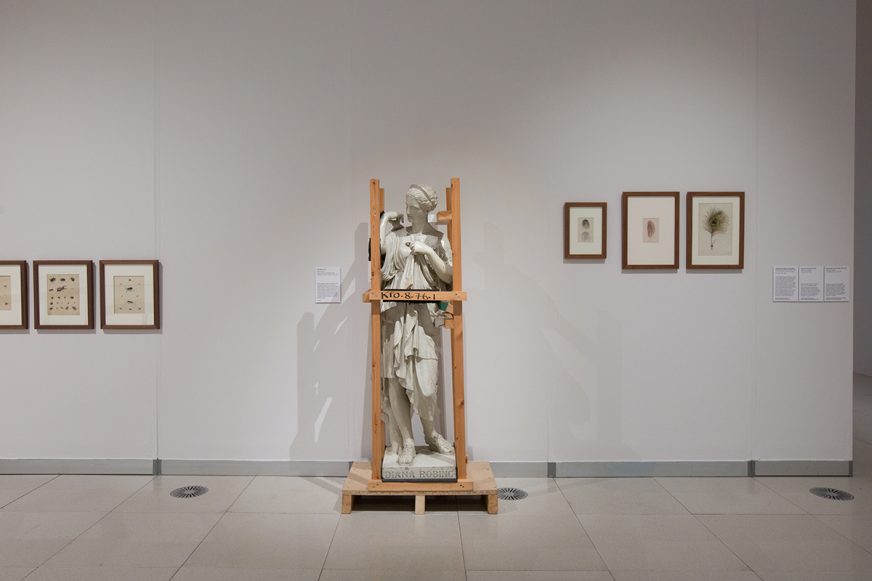
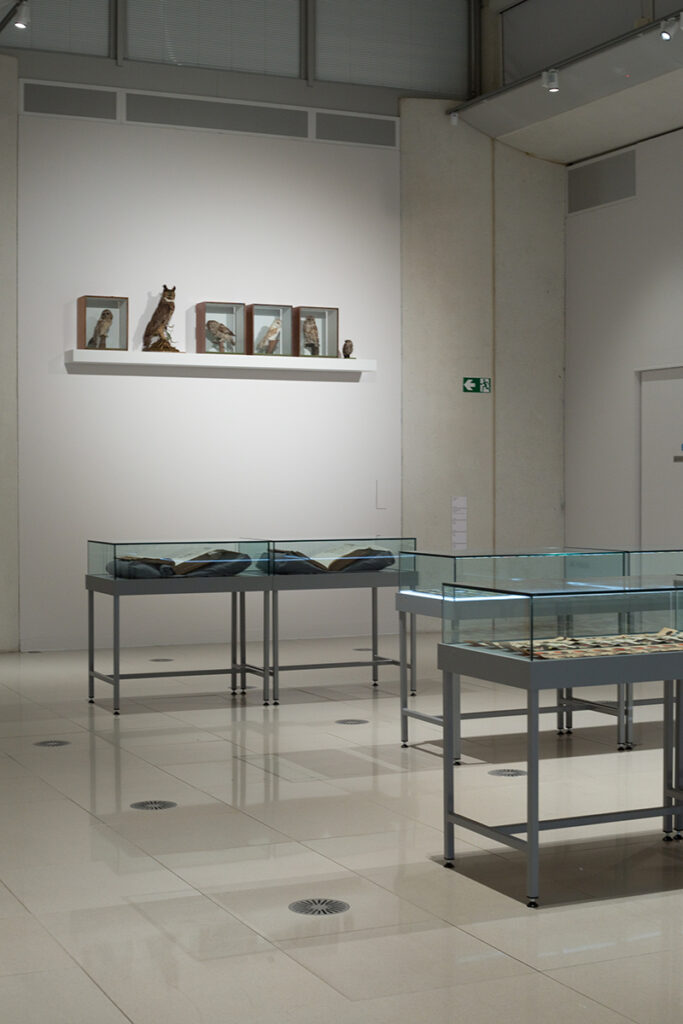
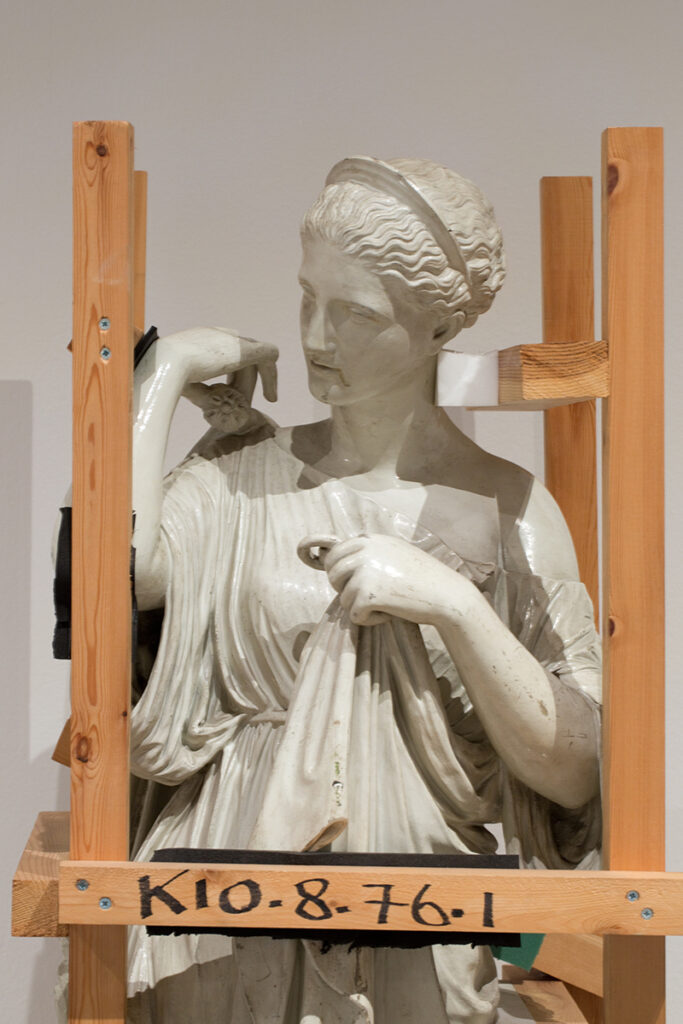
► This year’s program of WHW Academy is focused on the notion of artistic ecologies, and as part of the program you recently held a masterclass. What did you talk about with the participants, what were the topics and tasks?
Tim Etchells: We worked on a set of experiments with language, with writing. The interesting thing for me was that it was a group of people who at the time haven’t met each other in person (that was before the summer school took place in Zagreb in mid-May), a group of artists based in very different contexts and places. It was interesting to spend two days during masterclass convening this dialogue virtually, on Zoom, and to begin a process of making contact and exchange between that group of people and myself. It is obviously a different thing than working together physically in the same room, but I am interested in exploring the idea that in virtual space we still do connect, and we still can begin the collaborative processes and develop some of the skills you need to drive a collective kind of working. And that was what we were busy with; we did that through a set of experiments and tasks that I’d set, and which were mostly around writing and language.
Photographs: courtesy of Tim Etchells, Andy Brown, Amy Gibson, Hugo Glendinning and Stefan Handy
You can find out more about Tim Etchells’ work at timetchells.com.
Find out more about Tim Etchells’ work at timetchells.com. Follow the work of Forced Entertainment on forcedentertainment.com.
The interview is published as part of Vizkultura’s collaboration with the WHW Akademija.