Author: Barbara Šarić
‘I’m fed up with talking about photography.’
Dangerous way to start a conversation with a photographer. Luckily, Pieter Hugo lets out the breath he has been holding since we met up – since that morning, since his public talk the day before or longer, for all I know – and smiles. ‘Me too.’
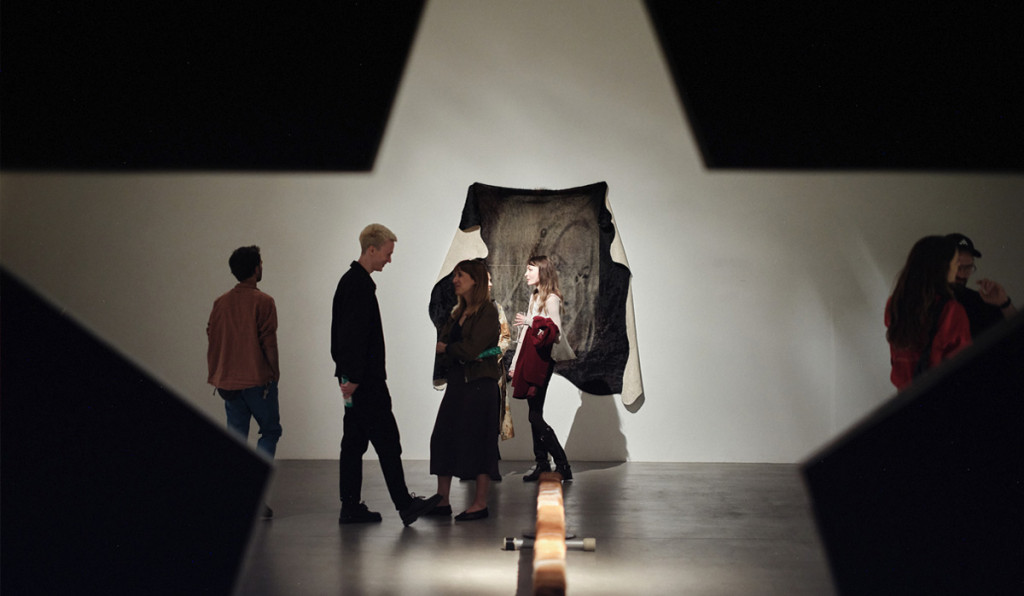
‘He looks like a pirate,’ says Maja, while I unimaginatively point him out across the crowded MSU gallery as the tallest guy in the room. I don’t know what real life pirates look like and Maja can often see things other people can’t, so I let it be. Built like a football player – American football, towering at close to 2m, with blond hair and a reddish tanned face to match, it is easy to believe that, while traveling through the Nigerian outback with the Hyena Men, the audience thought Hugo more of a spectacle than the animals.
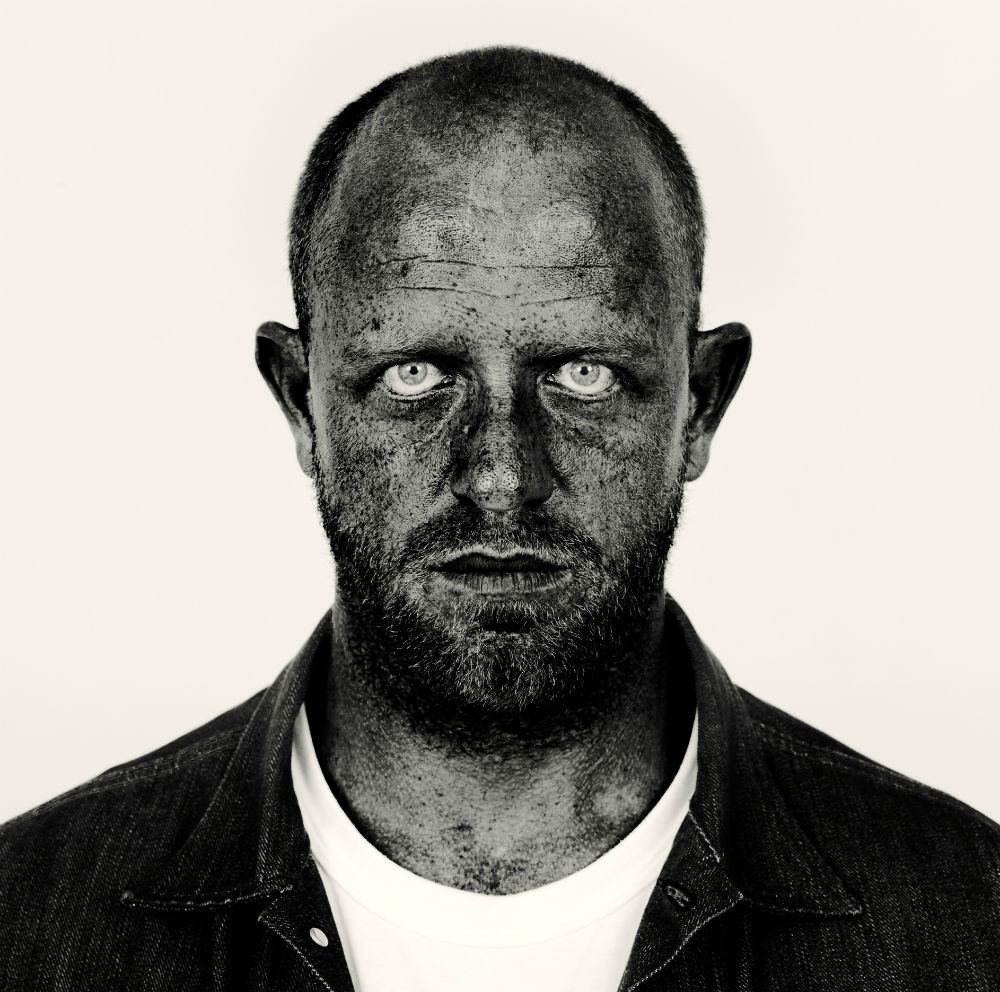
*Pieter Hugo, self-portrait
During his conversation with Sean O’Hagan, in front of a full auditorium in MSU, he is visibly nervous: hand running across his face at irregular intervals; prefacing a great number of answers with his interlocutor’s name – ‘Well, Sean…’; ‘You see Sean…’; ‘Sean…’ – something he doesn’t do in regular conversation. A couple of crude jokes; those that, although clearly spoken in jest, you feel the need to follow with ‘No, no, kidding.’
‘I hate public speaking,’ Hugo tells me when we meet the next day. It makes sense, most photographers do. As do, for that matter, most people.
Even the interview we are about to have, I think he would rather not. For it to happen at all, we had to call it a ‘conversation’. From interviews he has done before I somehow gather he doesn’t like tape recorders, so I rehearse pulling mine out seamlessly. ‘Don’t worry,’ I plan to say, ‘it’s not because we have to be official,’ I’m just a very bad note taker. I wonder how I could make my paper with printed out questions less white and, so, less threateningly in-your-face on the black bar table. In the end, none of these precautions are necessary. Pieter Hugo doesn’t care about the recorder, nor my paper and has braced himself to trudge through the next hour or two, no matter who I turn out to be. Pieter Hugo, the hangover notwithstanding, is a professional. And at least we’ve established we have that in common: we don’t want to talk about photography.
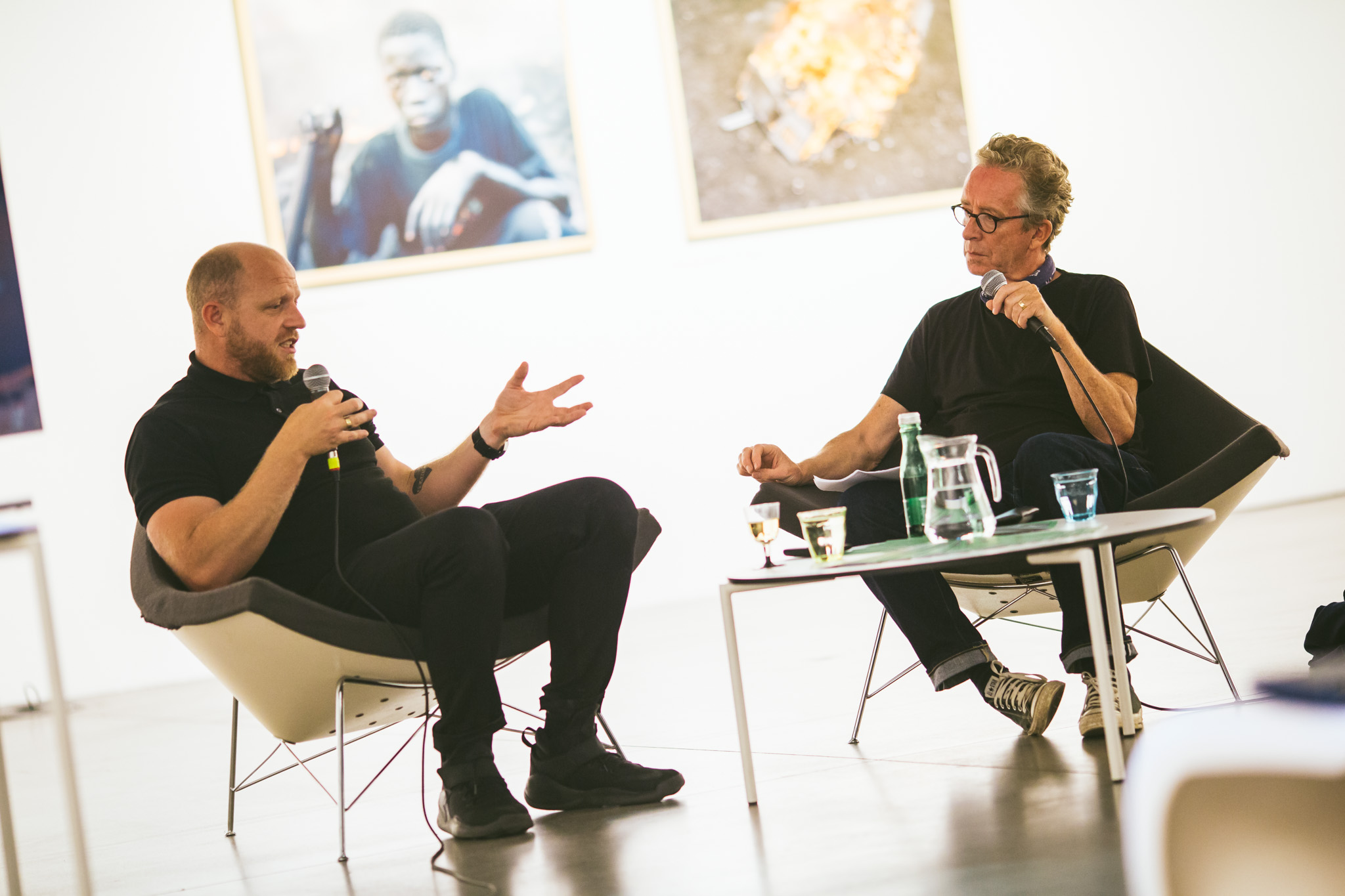
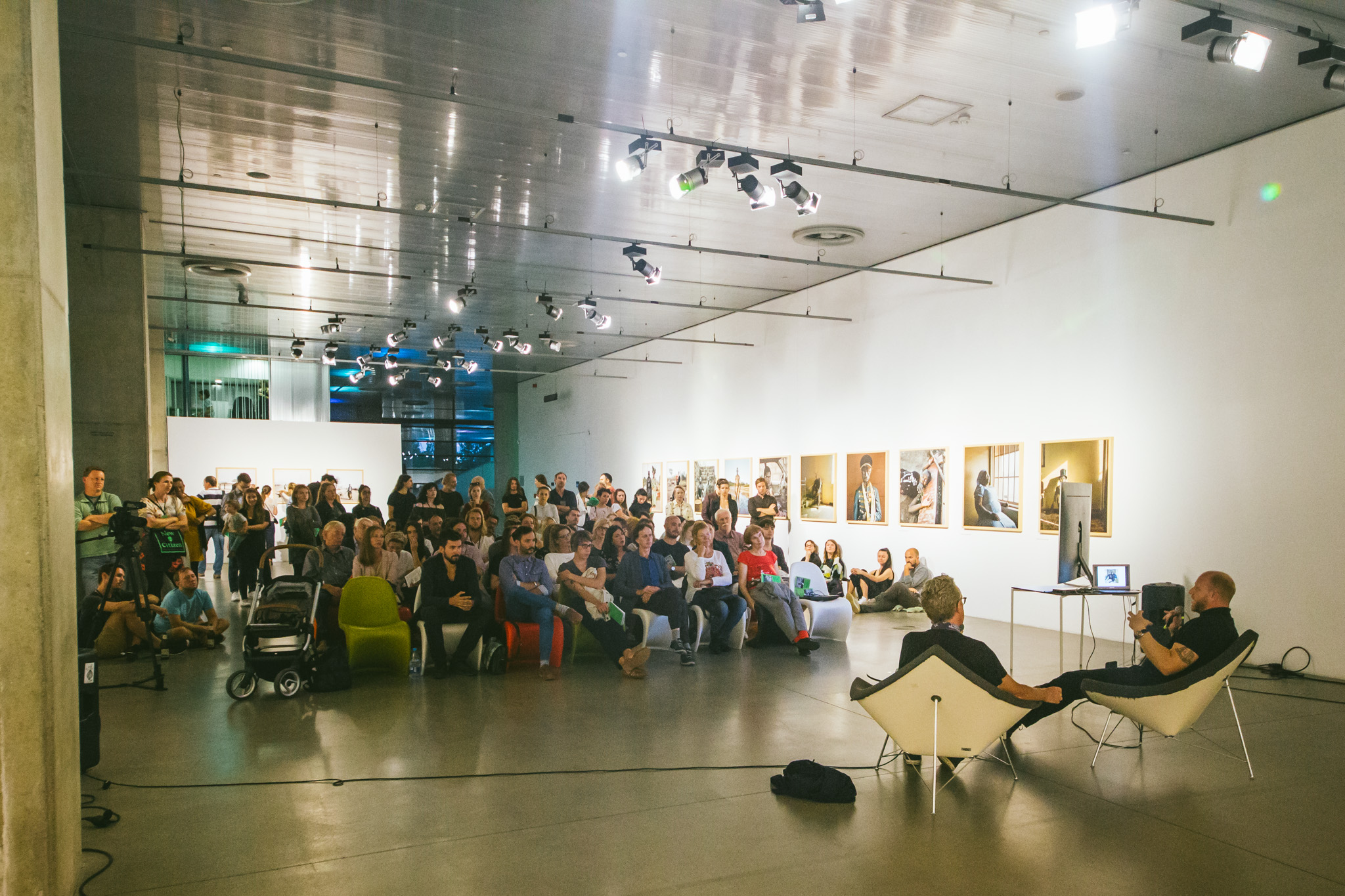
*Pieter Hugo and Sean O’Hagan’s talk at Organ Vida in MSU Zagreb, photo: Samir Cerić Kovačević
Hugo was born in 1976, the year of the Soweto uprising, one of the biggest and bloodiest in the history of South African apartheid, and he turned eighteen in 1994, the year of the first (universal suffrage) democratic election that brought Mandela and his ANC to power. How neatly this chronological fact places Hugo’s youth into the, arguably, decisive period of his country’s history, will give some future speculation-prone biographer many ideas about ‘who Pieter Hugo is and why he does what he does’. It has definitely given me a few before we even sat down to talk.
He grew up in an upper middle class family with parents – mother an artist, father an engineer – whose views, for that time, could count as liberal even though they still voted for the National Party. Mostly, his parents were apathetic. Politically and otherwise. In his teens – ‘twelve, thirteen’ – he realised the world around him was ‘fucked up’. ‘I think, when you are a teenager, you realise everything is fucked up.’ True, many of us have that moment, Buddha’s outings in his father’s chariot – provided, of course, we were lucky enough to have known some shelter in the first place. Some worlds, though, are more fucked up than others.
‘The youths of my generation have become more militant, the tools of repression have become more numerous and sophisticated
and black schools and ghettos have become centres of social protest and bloody conflict with the police and soldiers.
South Africa has entered its darkest hour…’
Mark Mathabane in an 1986 introduction to Kaffir Boy
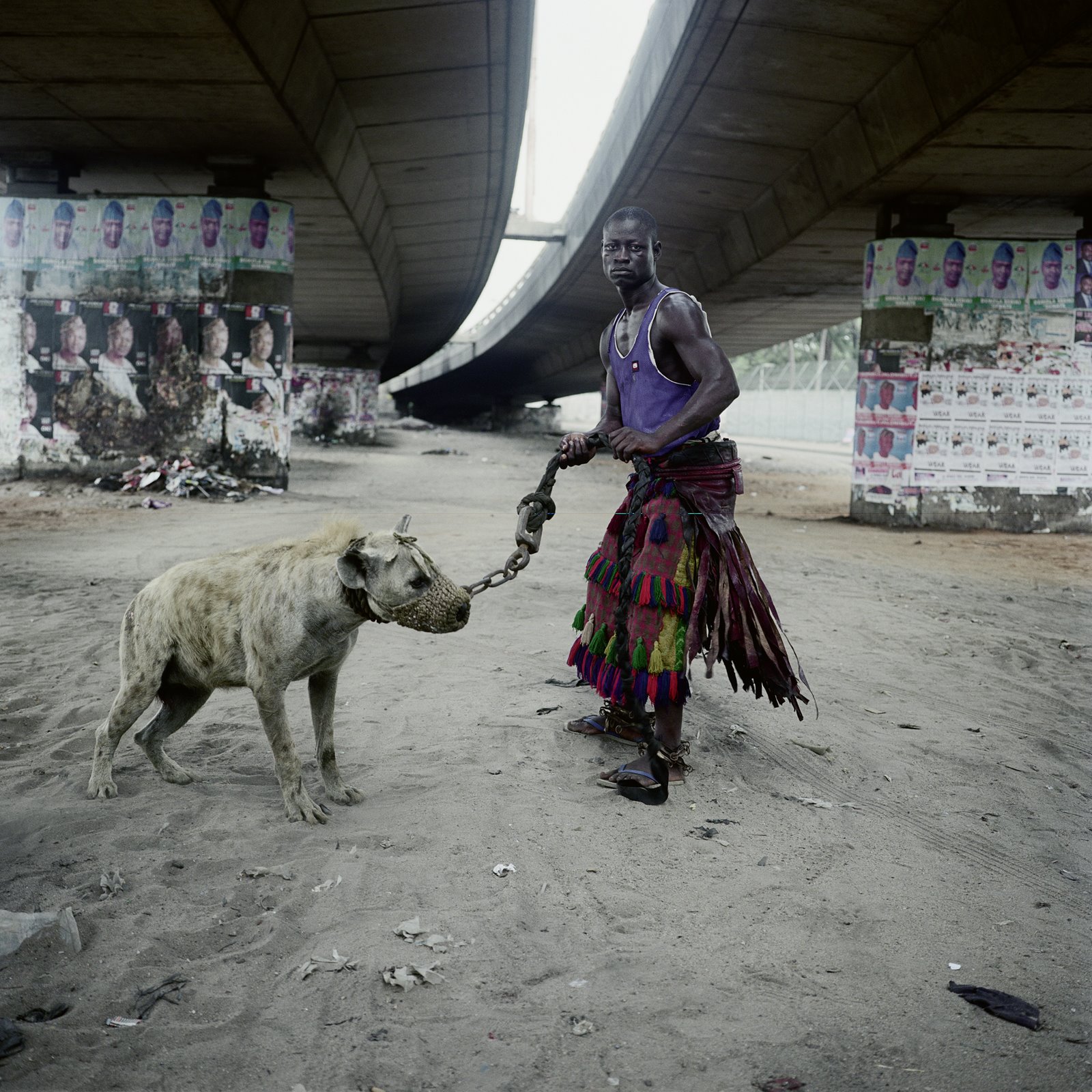
* Pieter Hugo – from the ‘Gadawan Kura’ series – The Hyena and Other Men
‘Every week we are stretched thinner over different pitches of grief…
How many people can one see crying, how much sorrow wrenched loose can one accommodate?’
Antjie Krog on covering the post-apartheid Truth and Reconciliation Commission, Country of My Skull
‘I think South Africa is a bit like Israel, where you just learn to live on top of other people. You don’t see them at all. You learn to unsee.’ Photography, in one of those clichés that have become one because they are so often true, gave him a way to look. ‘Photography enabled the curiosity that I had as a teenager, crystallised it in a way. It was an excuse to go out and see for myself , really engage with the world.’ (It is important to remember that the reason Hugo could move around the streets of Cape Town relatively, although not completely, freely, is that he was white. Black people at the time could still only move in those areas their work permits allowed them to.) Early on he realised that he ‘had a natural talent for it.’ He went out and photographed the homeless sleeping in the street; the police making an arrest. In 1993, after the political assassination of Chris Hani, leader of the South African Communist Party, all of Cape Town, and townships across South Africa for that matter, burst into riots and Hugo went out to photograph the aftermath. ‘In a way, the first photos I took, I am still taking them. There is a definite continuation from then onwards. The seeds are still the same.’
Around that time he became aware that ‘everything has this media input. It was becoming conscious of the fact that the environment around you is one that is a completely constructed reality. Which is at the cost of other people.’
Part of being an artist is cultivating
the space to be able to respond
to stimuli and to be able to take a position.
Pieter Hugo in conversation with Uta Ruhkamp
Still, to hit the streets of Cape Town in the eighties, it is not mere curiosity. It is different kind of restlessness, also common among photographers. (An older Croatian photographer once told me: ‘When the war started, I was just a kid, but I picked up my camera and went out to take pictures. Your country is at war, it’s what you do.’ I was left wondering, is it?)
‘I mean,’ explains Hugo, ‘I was just a teenager, an outcast. I liked being in the street. I liked walking. I liked getting into places where you are not supposed to be. If there was a button saying “don’t push this”, I would push it. I think part of growing up is that questioning of authority and structure. I think if I had more involved parents, they would have…reined me in a bit. I’m lucky that I got out of that era relatively unscathed.’
‘The first series I did, Looking Aside series, it was “really look at these people.” In a way saying also “look at me!” ’
To me almost all problems in life are born out of trauma
that in some way or another
relates to family relationships.
Pieter Hugo in conversation with Joanna Lehman
‘But you never extensively photographed your family?’ Apart from the one portrait of his parents, in their bed in Gonnemanskraal, which is part of his Kin series, we don’t see them anywhere else.
‘I photographed my brother,’ he says. On his wedding day, with his bride and son, also in Kin. ‘But no.’ He shrugs his shoulders. This is not an interesting question. At least not for him.
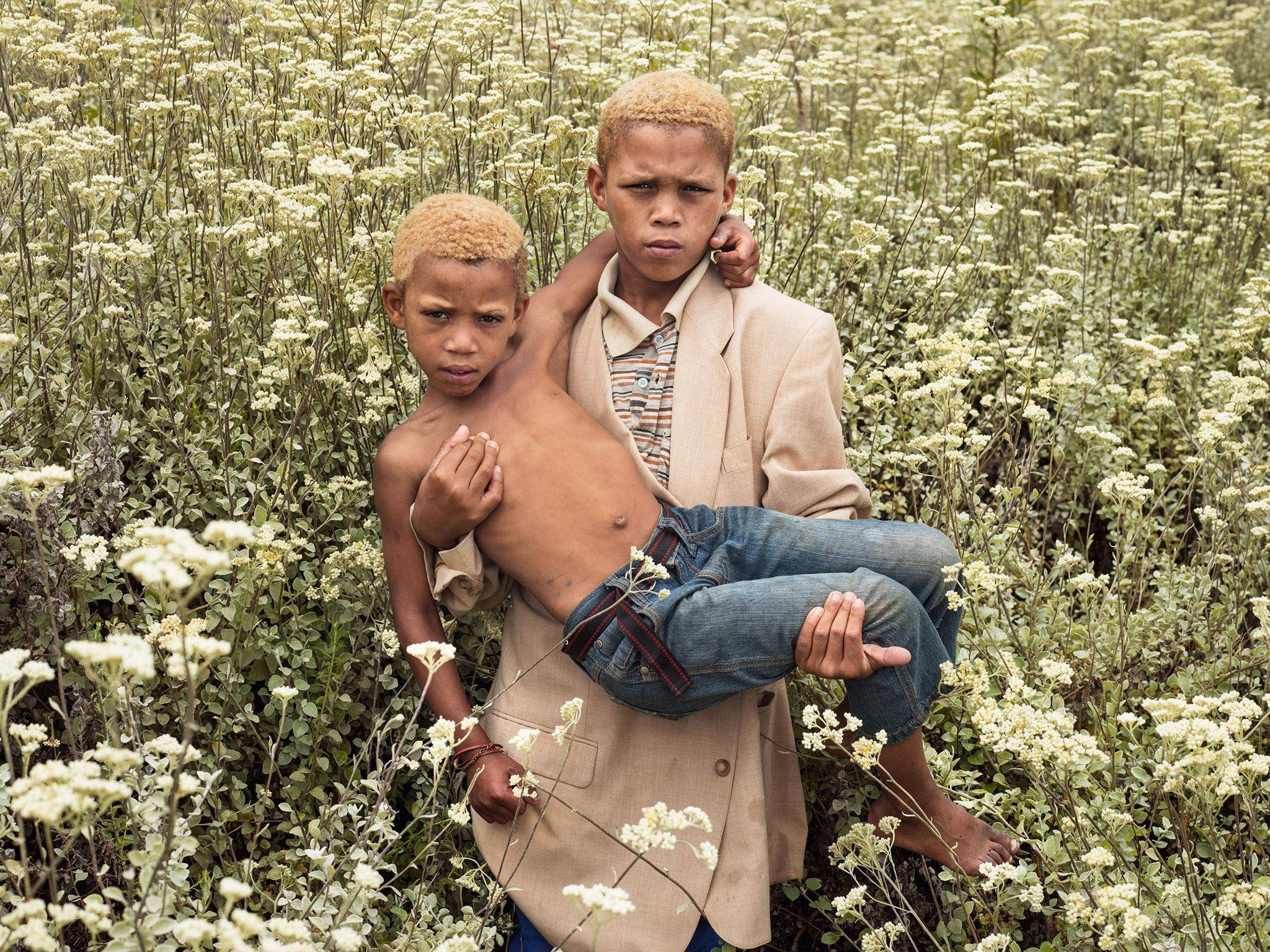
* Pieter Hugo – from the ‘1994’ series
The fall of apartheid was the exciting thing. ‘You have a revolution and things fall apart. Certain structures that have been in place, and a certain morality collapse and it is a while before a new one comes in. So, it’s quite an anarchic period, which is very liberating but it’s also very dangerous. We went from a police state to nobody’s quite sure who should be in charge. Who is patrolling borders? There’s drugs everywhere. At the same time, gender roles become more fluid. It was a very liberal period, everything seemed accessible. After revolution, it’s tempestuous. And then, of course, that got replaced. There’s a new narrative that comes out. Reality seeps back in and you realise, “damn, now we’ve got new bullshit to deal with”’
A community should not wipe out a part of its past,
because it leaves a vacuum that will be filled by lies and contradictory, confusing accounts of what happened.
Jose Zalaquett in Antjie Krog, Country of My Skull
I wolnder out louf if, in a country like South Africa, where language is such a contested and charged territory it isn’t easier to address what is going on in images.
This dialect which originated as a medium of oral communication between burghers and slaves,
would become a distinct language – Afrikaans – which, with English
and nine African languages, would be recognised as official languages in post apartheid South Africa.
Leonard Thompson, A History of South Africa
Hugo nods his head, but doesn’t take it further. What I said is both a truism and not part of his story.
‘Photography started out for me as something that gave me access to my surroundings; to try and figure out where I situate myself in that environment; in my environment. And then it developed into something else. It got me to travel the world. Before 1994, having a South African passport, you couldn’t travel anywhere in Africa, it was impossible. And now suddenly, I was getting assignments, for magazines. Just because of the fact that I was South African, which to them meant it was easier for me to work in Africa. Which is often bullshit. But it was wonderful getting my wanderlust fulfilled. I loved being out in the world. And to have people to pay me to do that!’
In the beginning it was seeing. Seeing for ages, filling the head with ash.
No air. No tendril.
Now to seeing, speaking is added and the eye plunges into his mouth.
Antjie Krog, Country of My Skull
‘So, I learned my craft through that, but I didn’t really think so much about what it actually meant. Then there came a period of a kind of waking up in and beginning to understand that there is more to photography; responsibilities that come with it. And my understanding of the medium, I think, became more complex. So, it shifted from curiosity to journalism to an art practice to something that…at some point it’s almost like you start having a dialogue with yourself and your own work. ‘For instance, the West Africa work that is shown here? That was purely just “I want to get out there in the world”. And then later on it became more “wow, you are coming from a position of entitlement, you are a white person making this work, there are problems of this.” So you start speaking to yourself with work about your work. You became your own biggest influence in way; in a weird way.’
In your text, treat Africa as if it were one country.
It is hot and dusty with rolling grasslands
and huge herds of animals
and tall, thin people who are starving. Or it is hot and steamy
with very short people who eat primates.
Don’t get bogged down with precise descriptions.
Binyavanga Wainaina, How to write about Africa
I want to know if ‘being a white South African, specifically, made it harder for you to work in Africa?’
‘I think it’s hard to say. I really struggle with this foreign perception of Africa as a whole. It’s like comparing Croatia with Chechnya, it’s just a continent. I think it really depends on the individual.’ Then he ads: ‘I think there’s something good about being an outsider when you make work. Only David Goldblatt, who is Jewish South African, could make work about Afrikaners. Nobody from within that community could have made that work at that time. And I feel a little bit like that being Afrikaans: I’m part of something, but I’m not part of something. Like, I understand it but I’m not part of it. And that alienation, I think, gives work a certain energy, which is important. That works for some people… For me it works.’
‘And being Afrikaans in South Africa?’
‘No, I think working in South Africa being South African definitely makes it easier. I think you just have a sensitivity to a situation that you find yourself in. It’s easier to approach people, I find. But, I recently had to photograph in Germany; Die Zeit commissioned me to travel through former East Germany for two weeks. And there I couldn’t…People just didn’t want to know about being photographed. No way. At some point I just had to stop telling people that it was for a newspaper, because there was this incredibly deep distrust of the media. Nine out of ten people I asked to be photographed, said no. There was a lot of explaining and very little done.’
I mention how I find it very hard to photograph on the street in Croatia. But, it could just be me.
‘I think it would be hard to work here,’ he agrees. ‘That’s my sense. In the cities particularly. It’s the zeitgeist at the moment, this distrust towards media. And this country is swinging in a very conservative direction and it’s a conservative distrust of the liberal media. I think that’s a big part of it.’
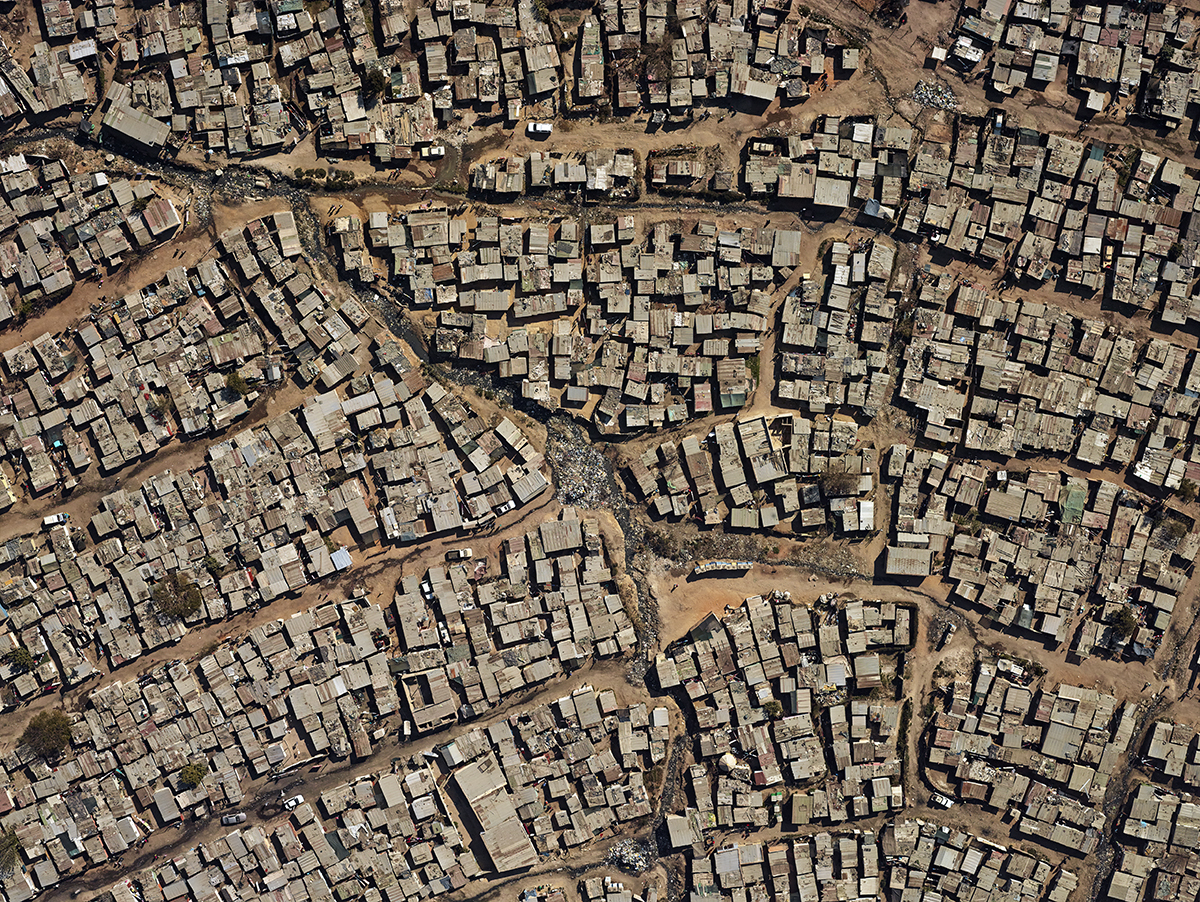
* Pieter Hugo – from the ‘Kin’ series
Hugo has no patience for the question of who has the right to photograph whom – a question he, because of who he is and where he works, has often had to deal with. He calls it a dead end. Indeed, if you start out to draw a line around the necessary closeness of your experience to the story you are trying to tell – only in your own country? your city? how about gender, age, socio-economic bracket? – you inevitably end up with the conclusion that the only story you ‘have the right’ to tell is your own. On the other hand, Hugo does admit it took him a while to feel comfortable with showing work done in places that were new and unfamiliar to him – like Tibet or San Francisco. ‘It’s a different topography. I would work and then it seemed derivative of other people’s work. It just took a bit of time to feel comfortable in that space. I think it’s a personal limitation. A perceived limitation which is not even true.’ He now photographs in other places as much or more than he does in Africa but it is still the work he has done in Nigeria, Ghana, Liberia, etc., that people mostly associate him with. (‘Do you mind being the hyena guy?’ He laughs. ‘Now it’s okay but there definitely was a period when it was like, every single conversation with anyone I met immediately went to that series. It just got very boring. But it’s interesting, that imagery has really entered public consciousness. It’s almost like they’re not my pictures anymore. They’ve become a cultural meme and I honestly don’t look at that work as my work anymore.’) The work done in Africa is also the work he has attracted most criticism with. Mostly from ‘white, liberal Europeans.’ White liberal Europeans also primarily want to know about how the ‘Hyena Men’ treat their animals.
Animals, on the other hand, must be treated as well rounded, complex characters …
Never, ever say anything negative about an elephant or a gorilla. …
Hyenas are fair game
and have vaguely Middle Eastern accents.
Binyavanga Wainaina, How to write about Africa
‘I’ve said this before, but there is something completely condescending in this. Assuming that people are not capable…In some ways it just shows me how out of touch some people really are. They are presenting a phantasy and then appointing themselves as cultural custodians and protectors of these people. How much more patronising do you want to be? I mainly work in the cities where people have television, they have satellite dishes, they have access to newspapers, they’re on social media…’
People, no matter what class of society they are from, are aware of the power of images.
Pieter Hugo in conversation with Joanna Lehan
Warranted or not; thoughtful; trite; blown up; cliché; well deserved…the criticism directed at Hugo’s work could very well be all of those things. But one thing it sure wasn’t, was unexpected. In a way, the only surprising thing about it, was Hugo’s surprise. And it is little wonder that every new work he puts out there still wrecks his nerves. ‘No, I still get nervous. Even when I shoot commissions I still get very nervous.’
‘I didn’t go to art school,’ he explains. ‘I wasn’t ready for the brutality of the art world. And I didn’t have the vocabulary to engage with it. Now I do. But it definitely upset me, because some people’s response was so…angry and visceral. But thought through, as well. It was amazing, that I could make work which came from such good intention that would then piss people off that much.’
He names Sebastian Boncy’s essay as one of those that really made him think. Interestingly, it is exactly the above argument that Boncy takes issue with: ‘… but we know that permission during process does not mean control or even approval over the final product. Larry Clark and Diane Arbus had permission, yet the ethics of their work is always front and centre in any serious discussion about their legacy.’
In the end, Boncy’s main point is that the discussion should continue. As, I am sure, Hugo would agree.
… the authors of this volume have looked to … especially anthropology, literary criticism,
geography, imperial history, art history, and photo-history
Introduction to Hight, Sampson, eds., Colonialist Photography: Imag(in)ing Race and Place
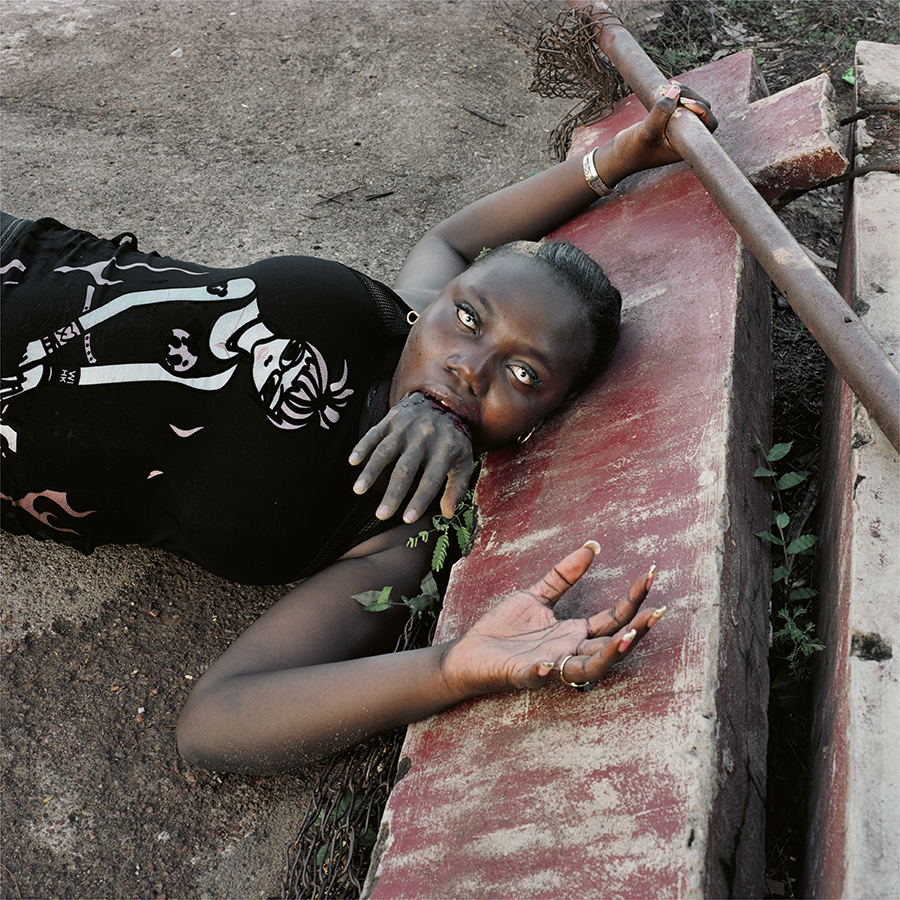
* Pieter Hugo – from the ‘Nollywood’ series
In southern Africa in the late nineteenth century,
photography was related to the history of exploration, colonisation, knowledge production and captivity.
Patricia Hayes, Power, Secrecy, Proximity
The conversation will be a long one. ‘Did you ever feel like you should be more or were criticised for not being more critical of white people? For instance when you were making Messina/Musina?
Bad Western characters may include children of Tory cabinet ministers,
Afrikaners, employees of the World Bank.
Binyavanga Wainaina, How to write about Africa
‘One person took me on about it and said I should be much more judgemental. But now, when I look at that work, that work is pretty judgemental. At the time I was like, “no, I’m not taking a position.” But if I look at it now, it’s “actually, it’s pretty damn critical.” Particularly the portrait of the five boys, they’re bursting at the frame. But then, there are some sympathetic portraits in between.’
‘You mentioned elsewhere that on that trip you encountered astonishing racism. You didn’t feel the need to show that?’
‘Well, how do you show that?’ Touché. ‘It doesn’t really visually manifest itself. It’s not like Charlottesville where it’s neo-nazis in white polo shirts. It’s more in people’s throwaways and their asides. Conversations where something always creeps in about “the blacks fucking up this country…”’
‘Do photographers in South Africa feel like they even have the right to make work that is not political?’
‘Well, it’s a good question. I find it very frustrating, you know. There was this political urgency, during the apartheid years, and anything else was considered frivolous. Now you have people like Zanele Muholi, whose work is still very political…’ Muholi photographs lesbian and transgender black women in a country whose president talks about same-sex marriage as ‘a disgrace to the nation and God’ and where ‘corrective rape’, not rarely resulting in the victim’s death, is a common occurrence and she also addresses such issues as the Marikana massacre or the long-standing practice of ‘necklace’ killings. Muholi’s work is as political as it gets.
I’m tired of dealing with dead people. I now deal with sunsets.
Peter Magubane, talking to Keri MacDonald for NY Times
But,’ Hugo continues, ‘if I look at people like Alison Rossiter, Chris McCaw, Mathew Brandt…Artists who work with photographic materials, whose imagery is not representational; that type of work, people just don’t even consider in South Africa. And I find this very limiting. In some ways it’s fantastic that the work is political, but sometimes it just gets tiring. It’s exhausting to live like this. ‘And I think it comes from the academic level, where different work is not encouraged. The gallery system and the museums don’t encourage it. I feel people get pushed into a certain direction, for a variety of reasons. It’s a double-edged sword, on the one hand it makes for intensely engaged political work, but on the other it makes for work that’s sometimes so banal.’
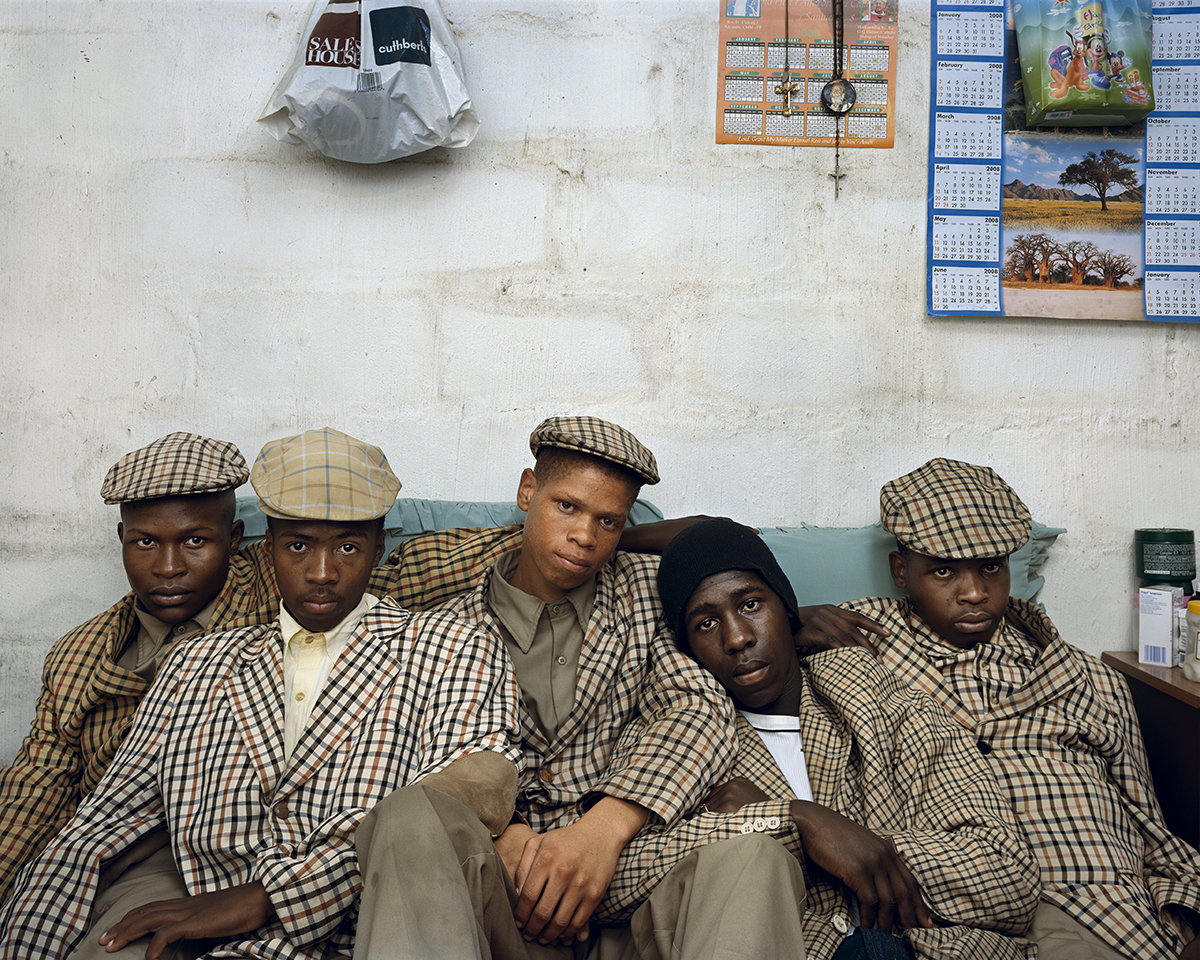
* Pieter Hugo – from the ‘Kin’ series
I quote David Goldblatt, on his series Particulars: ‘‘I was always struck by the need to make photographs that were somehow relevant to our society, to our situation dealing with apartheid and the opposition to it. But I wanted somehow to be free just to photograph the things that I found beautiful.”
Hugo thinks about it for a moment.
‘Yeah…’ he nods, reluctant. ‘But, I still think Particulars is in some way quite a political work. You have a picture of a white man’s testicles in his pants. And there’s not one picture that in any way looks severely at black people, for instance. David’s too politically conscious to do that. The absence of certain imagery speaks volumes. About self-censorship.’
Speaking of or simply because it’s the next question on my paper: ’Is Nollywood an angry series?’
Nollywood, a series of portraits of Nigerian actors in costume, which Hugo had the night before named as his favourite series – because it allowed him to expand and loosened up the shackles of his imagination – and, at the same time, the series with which he thinks he has failed the worst. Work which has been most surprisingly misunderstood and most condemned by his critics.
‘No, it’s a funny series! It’s not angry at all. I have a very dark sense of humour. And I feel that series is, in a way, the most authentic. If you want to know something about me, look at that series.’ He thinks about it for a moment. ‘No, maybe there is anger there. No, that is an interesting…The anger is at the viewer. The stupidity of your average gallery goer. It was also the third show I was having in Chelsea and the issue with the relationship between the work in a little gallery space and the selling of prints… I still haven’t quite resolved it.’
I don’t press him on it. It’s one of those photography discussions I am weary of starting because they also lead into a dead end. Or more like a gridlock – of ideas, ideals, sensitivities and realities.
‘And Nollywood…’ he goes on. ‘In some ways, maybe people just didn’t get the joke. Maybe it just reaffirmed the stereotypes that people held about ‘Africans doing crazy shit. ’I think there is something to be said here for the nature of imagery – photography is so much about the baggage you as the viewer bring to looking at pictures. So, if you come already close minded, wanting affirmation of certain stereotypes that you hold, you’re going to find them no matter what you look at. No matter what the artist’s intention is.’
It is true. It took me a while before I saw past the baboons and the hyenas to the background of The Hyena Men series and thought ‘Damn, what is this place?!’
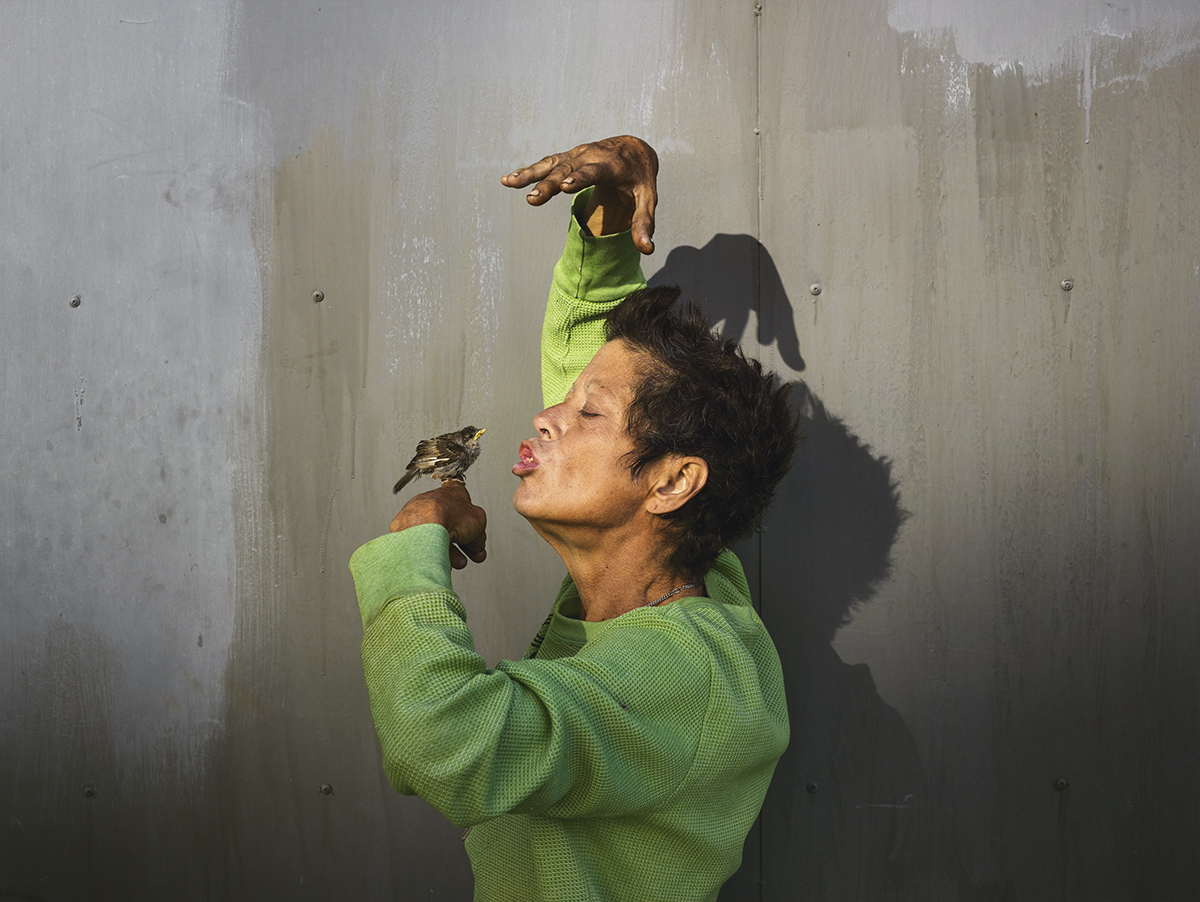
* Pieter Hugo – from the ‘California Wildflowers’ series
… where the ant holds his court in splendour and the sands dance forever.
Chinua Achebe, Things Fall Apart
For the men and their animals. The starkness of their surroundings is a reflection of their living conditions and the fact that they is little choice in ‘choosing’ this profession if they want to make a living – that is the point. It is also not what everyone takes away from the image. And the artist is as burdened by her/his preconceived notions as anyone else. The story of Permanent Error is, for Hugo as for the viewer, environmental devastation. As well it should be – it is tragic. But at the same time, scavenging the remains of Western digital waste provides at least some kind of income for those working there. There is always more to the story.
White people think it is not capitalism but the rise of coloured people that is making them poor.
Angela Davis, Steve Biko memorial lecture
‘What about South Africa?’ I ask. ‘You say you started on Kin to try and answer the question “How does one live in this society? How does one take responsibility for history and to what extent should one try?” You say this didn’t trouble you before you got married, what has changed?’
‘Well, before…Yeah, South Africa is quite a messed up and dangerous place but I felt comfortable making my own decisions and taking my own responsibility for living there. I am fortunate that I don’t have to live there, whereas there are a lot of people who would probably like to emigrate but they can’t. And with kids, you’re taking responsibility not just for yourself but for something that you’ve brought into this world. So, you’re like, “okay, if I’m going to put roots down somewhere, drop an anchor somewhere, I might as well look at this place, make up my mind as to how I feel about it, and what my responsibility is here.”’
At the end… I think I failed.
I think I feel more confused than in the beginning of the project.
Pieter Hugo in conversation with Michael Salu
‘In deciding to do that I opened a can of worms. Pandora’s box. In many ways you start seeing how much worse the place is than you even thought. On the other hand, you see how much more beautiful it is than you thought. In the end it just got much more polarised, that got much more pronounced.’
‘What did you learn?’
He laughs. ‘Ahmmm…Well I’m still here, aren’t I?’
I know that answer. I know that a whole life can fit into that answer. And I also know it answers nothing at all.
‘If anything,’ he says, ‘I feel more tied to the historical trajectory. That I’m part of it. I feel part of that narrative.’
South Africa, understandably, is one place he keeps coming back to in his work. Another is Rwanda – he has been going there regularly since 2004 when he made his series Vestiges of genocide. His recent series 1994 is made of portraits of South African and Rwandan children.
‘There’s something strange about Rwanda. This 1994 series. There’s something about this date in South Africa and Rwanda that’s like the Sun and I’m a planet that keeps orbiting the same theme. A groove I am stuck in. That’s how I feel about my relationship with Rwanda. And South Africa a little bit. It’s like this Sun I’m circling all the fucking time. But I won’t go back to Rwanda, I don’t think.’ Rwanda, he says, is stable but it is a highly controlled police state and Hugo, coming and going so often, is on the government’s radar.
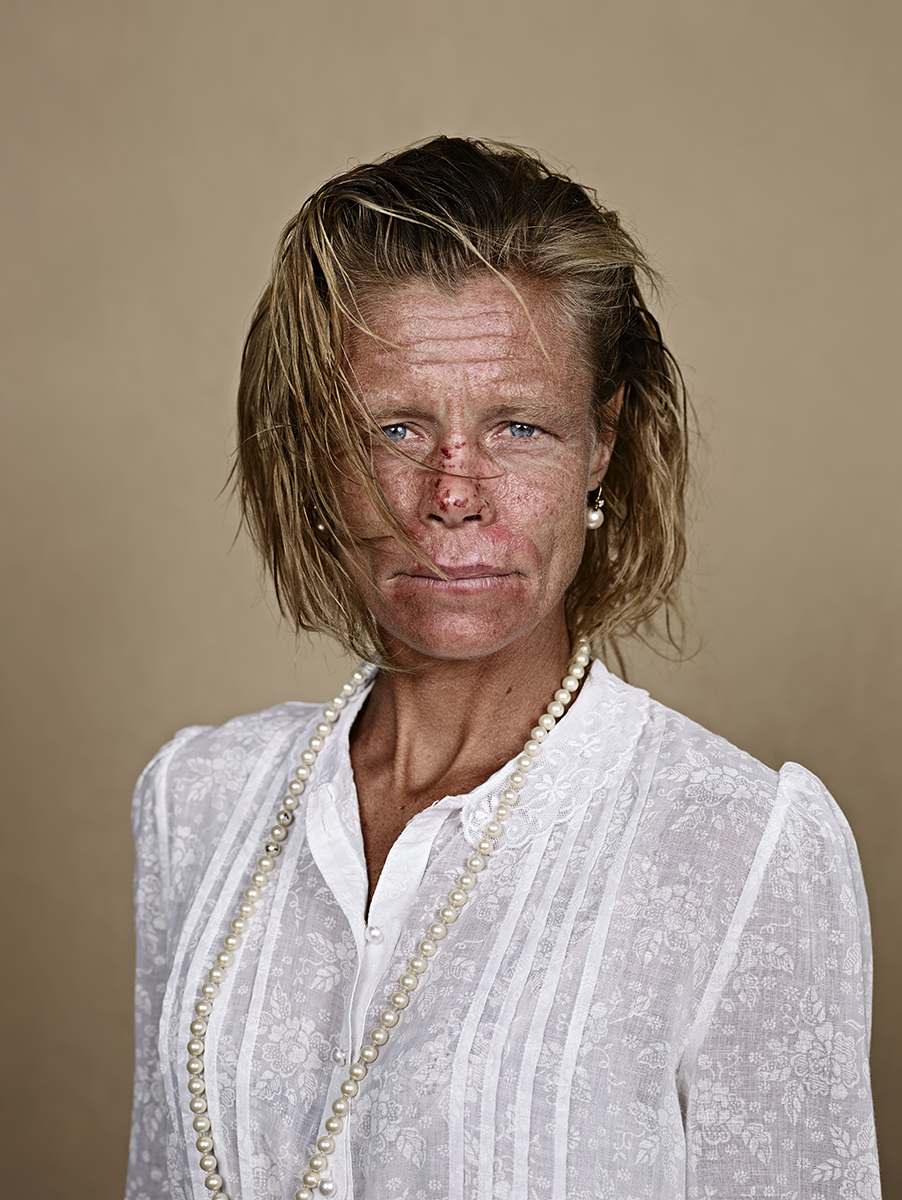
* Pieter Hugo – from the ‘Kin’ series
We talk about the situation in Rwanda a little bit and his experience in making the ‘reconciliation portraits’ – a genocide perpetrator and a survivor, posing for a photograph together, telling the story of reconciliation. But, the story, of course, is again much more complicated than the photos can show – ‘Actually are these people really forgiving each other? I don’t think so. Some of them are not.’ – and it is up to the writer to present it in all its complexity. Which some do better than others. Hugo also tells me that any discussion of ethnicity, any mention of Hutus and Tutsis, is banned in Rwanda. ‘On the one hand, okay, it is good to go beyond that but on the other, I don’t think them banning the discussion of ethnicity is so benevolent. It is more that it could challenge their stronghold on the country.’ Similarly, in South Africa, the government is looking for ways to justify their failure to address key social issues – poverty, education, public health – and has found one way in using PR to stir racial animosity and keep the heat off themselves. ‘They made “white monopoly capital” into a catchphrase that the government could use to discredit journalists or anyone who was critical of the government, who happened to be white. So once again, you’re seeing history (re)constructed.’
I just have a healthy distrust of any collective national paradigm.
If you’ve seen your history rewritten
and you don’t develop a healthy distrust of the national ‘story’ you’re supposed to buy into,
well you’re incredibly naive.
Pieter Hugo in conversation with Michael Salu
He points out it is a whole conversation in itself and he is right. Where does that leave photography?
In an article from 2008, Sean O’Hagan cites Hugo’s (intoxicated) rant about ‘the impossibility of photography’. (When I mention this he laughs loudly and then grabs his phone: ‘I’m gonna text Sean that you just asked me about this!’) So, how does he keep going – has he changed his mind?
‘That quote was said when I was totally pissed, and I was just really frustrated with Arles (photo festival). It was in Arles and just seeing the whole festival, seemed so banal.’
(me: ’I have never been to Arles.’
Pieter: ’Oh, you have to go!’)
‘I think I was just bored with photography. And the dialogue that photography…At that time, it seemed very repetitive.’ Here we are, full circle after an hour of talking mostly photography.
‘I think at that time I became more aware of limits to what my medium could do. It just felt like, if you really want to know something about something, read up about it. But photography, if anything, is only a catalyst to something else. All that it really does is to show the surface of things, in a way. And the rest of it is what you as the viewer bring to the imagery.’
‘Well,’ I say, ‘that’s also true about what you read…’ This finding confirmation for what you already agree with.
‘I don’t know, you can make a more complex argument with prose. Photography, if anything, is closer to poetry. It’s just a lot of impressions. I mean, yes, they’re beautiful and they’re poetic. They can be provocative.’
I dwell in Possibility – / A fairer House than Prose – / More numerous of Windows – / Superior – for Doors –
Emily Dickinson
‘But, do you think it still has the power to start conversations?’ I ask.
‘Well, we’re sitting here, aren’t we?’
‘I think,’ he adds, ‘that quote just had more to do with where my head was at the time. In many ways, I’m more interested now in seeing photographs in museums, placed alongside sculpture, for instance. Clever curators who can take it to a multileveled space…Have you read that Paul Grahm essay, I think it’s called The Apple? (actually two essays: Unreasonable Apple and Photography is Easy, Photography is Difficult) You must read it, it’s on his website. He talks about photography being so easy, it’s actually ridiculous. But what makes his photograph of an apple different than someone else’s, who can take the same picture, is that he has spent his entire life looking. And there’s something to be said for that in itself, I think. That visual analysis. And creating bodies of work that can stand on their own and change the way you look at the world. To me, that’s good art in general. I know something is good if it has changed the way I see the world. When I look at the South African landscape, I see David Goldblatt pictures everywhere, you know. When I’m in the US and I’m in the middle of nowhere, I see Paul Grahm, Shimmer of Possibilities, the beauty of the mundane, of the banal. So, photography does have that capability.’
David Goldblatt’s work made me realise photography doesn’t have to be an exclamation point.
It can be a coma, a semi-colon…
Pieter Hugo in conversation with Sean O’Hagan, Organ Vida, MSU
Just then a text comes from Borko saying he is on his way to pick us up. Pieter takes this as cue that the interview is over and immediately derails the conversation from himself. ‘Tell me about ICP.’
I do. And then comes the dreaded question:
‘So, what about your work?’
Before I can grab hold of one of my go-to non-answers (‘Oh, there’s always something.’; ‘You know, work…’) I hear myself saying: ‘Nothing.’
‘I’m fine with it,’ I rush to add. ‘I mean, it bothered me for a long time but, I guess, I just don’t have anything to say right now. Photographically.’
‘At the moment I feel a little bit like that,’ he says. ‘I want a shift to happen, I don’t want to force it. That’s why I’ve kind of put everything on hold.’
‘It’s interesting, you know,’ he ads, ‘I’m seeing a really good therapist at the moment, and we speak about making work and where that comes from. And that’s definitely put a hold on my work. In some ways I feel like, since I’ve addressed some issues, the need to make work has become different. It has become something less…compulsive. Something I can be more considered about.’
Whatever comes after this will be something new and he agrees that is exciting. But, he ads, ‘it’s also scary.’
If you only knew what kind of trash/ Poems shamelessly grow in…
Ana Ahmatova
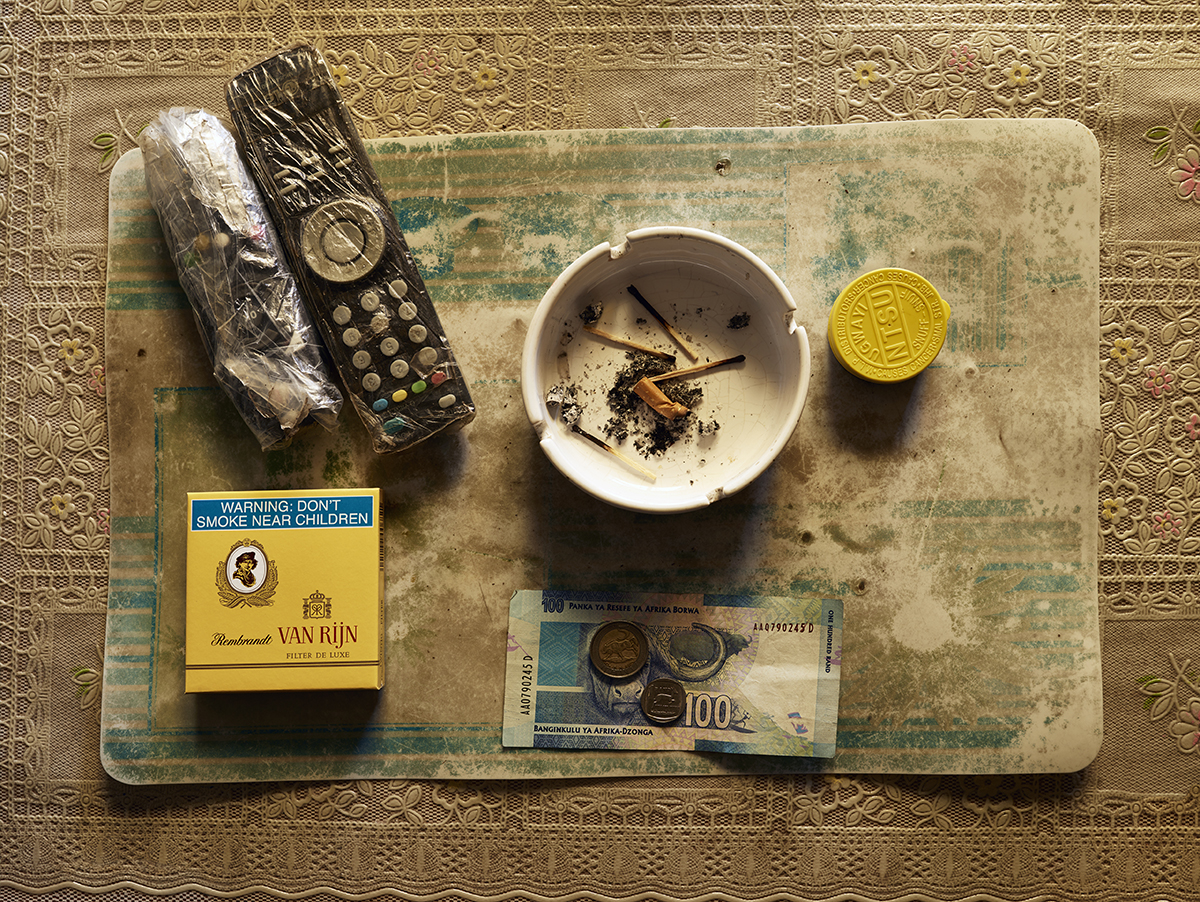
* Pieter Hugo – from the series “Kin”
A version of the interview on Croatian is available here